A friend forwarded me a screenshot last week. Some app was advertising 22 percent APY on staked ATOM and he wanted to know if it was a scam. It wasn’t, technically. Kraken really does list gross rates that high on certain assets. But by the time you subtract the platform’s commission, the actual number he’d walk away with was closer to 16 percent, and that’s before you factor in lockup periods, slashing risk, or whether the platform holding his coins is one bad quarter away from becoming the next FTX headline.
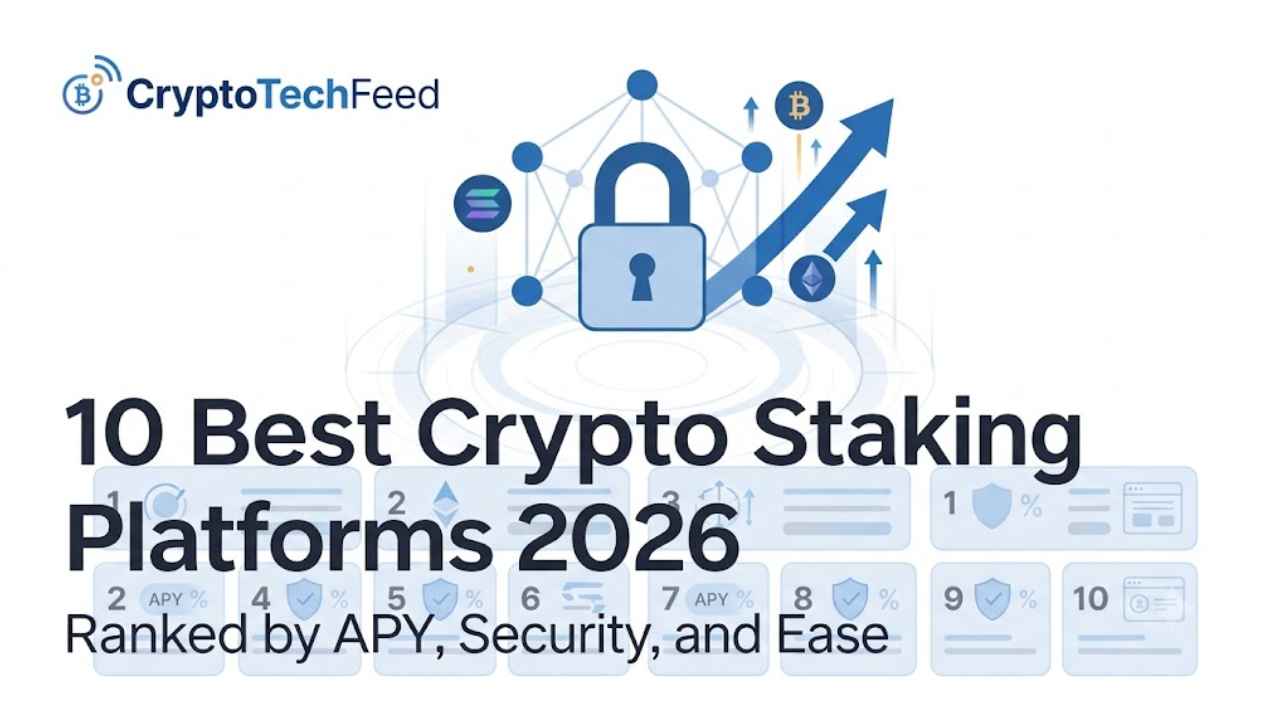
That gap between the advertised number and the honest number is where most staking research goes wrong. So this list ranks the 10 best crypto staking platforms on four things that actually matter: real net APY, custody type, security track record, and how much friction you’ll deal with getting your money back out.
How We Ranked These Platforms
Staking isn’t one product, it’s three different risk profiles wearing the same marketing language. Custodial exchange staking hands your coins to a company and trusts them to run validators correctly and stay solvent. Non custodial liquid staking keeps your assets in a smart contract you never fully control either, but at least you can verify the code. Solo staking means you run the validator yourself, which is the safest option in theory and the most technically demanding in practice.
Because of that, this ranking weighs security audits and custody type as heavily as the headline APY. A platform offering the highest crypto staking rewards on paper isn’t a win if the commission eats half of it or the lockup period traps your capital during a market crash.
The 10 Best Crypto Staking Platforms
1. Kraken currently posts the highest gross rates among licensed exchanges, up to roughly 22 percent on select assets like ATOM, though a 26 to 30 percent commission brings the real net yield down to something closer to 16 percent on bonded products. Kraken has held a strong security reputation since 2011 without a major exchange level breach, which is rare in this industry and part of why it consistently scores near the top of independent security rankings.
2. Binance covers the widest range of assets, over 300 coins across flexible and locked products, with promotional rates occasionally touching 19 to 20 percent on smaller tokens. The tradeoff is a steep commission structure and restricted access for US residents, so it suits altcoin heavy portfolios more than simplicity seekers.
3. Coinbase trades yield for regulatory comfort. Rates on ETH sit in the 3 to 5 percent range after Coinbase’s commission, which runs as high as 35 percent outside its subscription tier. What you’re paying for is a fully regulated US platform with one click staking and no technical setup, which is exactly why it remains the default entry point for beginners.
4. Lido is the largest Ethereum liquid staking platform by a wide margin, holding close to a third of the entire liquid staking token market. Deposit ETH and receive stETH, a token that keeps earning rewards while staying usable across nearly every major DeFi protocol. Multiple public audits from firms including Sigma Prime back the contracts, though concentration in one protocol holding this much staked ETH remains a legitimate decentralization concern for the network as a whole.
5. Rocket Pool is the decentralization focused alternative to Lido. Instead of concentrating stake with a handful of large operators, Rocket Pool spreads validation across thousands of smaller node runners, each required to post collateral. The APY sits close to Lido’s, and the rETH token works across the same DeFi ecosystem, but you’re trading a little convenience for a meaningfully more distributed validator set.
6. Jito is the answer if you’re building a Solana staking guide around liquid tokens rather than exchanges. JitoSOL captures MEV rewards on top of standard validator rewards, pushing its yield above most competitors on the network. It’s become the largest Solana LST by adoption, and its integrations across Kamino, Drift and Jupiter mean the token stays useful well beyond just sitting in a wallet.
7. Marinade was Solana’s original liquid staking protocol and still delegates across more validators than most competitors, which matters if you care about not concentrating stake too heavily with any single operator. Marinade holds SOC 2 Type 2 certification, an unusual step for a DAO governed protocol, and mSOL enjoys broad DeFi acceptance as collateral.
8. OKX sits in the middle of the pack, offering both custodial and DeFi aggregated staking products across close to 300 assets. Rates vary widely by asset and product type, and OKX re-entered the US market in 2025, making it a reasonable second exchange for diversifying custodial exposure rather than a primary choice.
9. Crypto.com appeals to mobile first users and CRO token holders, who unlock meaningfully better rates through the platform’s tiered loyalty structure. Standard rates run modest, often under 8 percent, but the flexible and fixed term options give more control than most exchanges offer.
10. Nexo offers some of the highest published rates outside the licensed exchange tier, up to roughly 13 to 15 percent on NEXO token holdings specifically, with lower baseline rates on major assets. It isn’t available to US retail users the same way Kraken or Coinbase are, so it fits better as a supplementary platform than a primary one.
Comparison Table: APY, Lockup, Audits and Custody
| Platform | Approx. Net APY | Lockup Period | Security Audits | Custody Type |
|---|---|---|---|---|
| Kraken | 3.5% to 16% | Flexible to 28 days | Independent security reviews, strong track record | Custodial |
| Binance | 3% to 19%+ | Flexible or 30 to 90 days | Regular third party audits | Custodial |
| Coinbase | 3% to 5% | Flexible | SOC 2 compliant, regulated | Custodial |
| Lido | 3% to 4% | None (stETH tradeable) | Sigma Prime, Certora, multiple public reviews | Non custodial |
| Rocket Pool | 3% to 4% | None (rETH tradeable) | Public audits, active bug bounty | Non custodial |
| Jito | 7.5% to 8.5% | Epoch delay or instant swap | Public audits | Non custodial |
| Marinade | 6.8% to 7.5% | 2 to 3 day delay or instant | SOC 2 Type 2 | Non custodial |
| OKX | Varies by asset | Flexible or fixed | Third party audits | Custodial/hybrid |
| Crypto.com | 1% to 8% | Flexible or fixed | Regular audits | Custodial |
| Nexo | Up to 13% to 15% | Flexible | Third party audits | Custodial |
ETH Liquid Staking Platforms, Compared Properly
Ethereum staking has matured into a genuine three way choice. Roughly 36 million ETH is staked network wide today, close to 29 percent of total supply, spread across about 1.1 million validators earning an average yield near 3.3 percent. That average number hides real differences depending on where you stake.
Coinbase’s cbETH gets you there with zero technical setup, at the cost of the highest commission of the three. Lido’s stETH gives you the deepest DeFi liquidity of any liquid staking token on Ethereum, useful if you plan to lend or provide liquidity with your staked position rather than just holding it. Rocket Pool’s rETH pays a similar rate while spreading validation across a genuinely decentralized set of smaller operators, which matters more than it sounds if you care about Ethereum not depending too heavily on one liquid staking provider.
None of these three will make you rich. ETH staking yield has compressed as more supply gets staked, and that’s a healthy sign for the network even if it’s a boring one for your portfolio.
Solana Staking Guide: Native vs Liquid
Solana staking works differently enough from Ethereum that it deserves its own quick guide. Native staking through your wallet is genuinely the lowest risk option here, since it’s built directly into Solana’s runtime rather than routed through a third party smart contract, and it currently pays somewhere around 6.5 to 8 percent depending on validator commission.
Liquid staking through Jito, Marinade or Sanctum pays slightly more in most cases, largely because Jito’s MEV capture adds extra yield on top of the base rate, and you get instant liquidity instead of Solana’s roughly two to three day unstaking delay. Around 14 percent of all staked SOL now sits in liquid staking tokens, a share that’s grown fast but still trails Ethereum’s liquid staking penetration by a wide margin.
The practical advice for most people is simple. If you don’t need the liquidity, native staking through a reputable validator is the cleaner, lower risk choice. If you want to use your staked SOL elsewhere in DeFi while it earns, Jito and Marinade are the two names worth trusting first.
How to Stake Safely
Safe crypto staking comes down to a handful of habits that matter more than chasing the highest posted number.
- Check net APY, not gross APY. The commission a platform takes can turn an advertised 20 percent into something half that size once fees apply.
- Understand the custody model before you deposit. Custodial staking means trusting a company’s solvency, not just its code. FTX is the reminder of what happens when that trust is misplaced.
- Read whether the protocol has been audited by an independent firm, and check whether that audit is recent. A two year old audit says nothing about code shipped last month.
- Know the exact lockup and unbonding period before committing, especially on assets with multi week unstaking queues that can trap you during a downturn.
- Spread stake across more than one platform or validator instead of concentrating everything with a single provider, which limits your exposure if any single platform runs into trouble.
- Watch for slashing conditions on proof of stake networks, where validator downtime or misbehavior can cost you a portion of your staked principal, not just your rewards.
FAQ
What is the best crypto staking platform for beginners? Coinbase remains the simplest entry point for US users, offering one click staking with regulatory oversight, though its commission means lower net yield than more hands on alternatives.
Which platform offers the highest crypto staking rewards? Kraken currently posts the highest gross rates among licensed exchanges, up to roughly 22 percent on select assets, though commissions bring the real net yield down meaningfully.
Is Lido or Rocket Pool better for ETH liquid staking? Lido offers deeper DeFi liquidity and a larger stETH ecosystem, while Rocket Pool spreads validation across more independent node operators, making it the more decentralized choice at a similar yield.
Should I choose native or liquid staking on Solana? Native staking is lower risk since it runs directly through Solana’s protocol rather than a third party contract. Liquid staking through Jito or Marinade pays slightly more and keeps your SOL usable in DeFi, at the cost of added smart contract risk.
Is crypto staking safe? Staking carries custody risk, smart contract risk, and slashing risk depending on the platform and asset. It becomes reasonably safe when you check audits, understand lockup terms, and avoid concentrating everything in one place.