
A friend sent me two screenshots last week. One from Arbitrum, one from Optimism. Same swap. Same wallet. Same day. The fees were off by a few cents. He wanted to know which chain was “actually” cheaper, like there was some secret answer hiding in the data.
There kind of is. It’s just not a clean one liner.
Both chains ride on Ethereum’s blob space now. Both got dirt cheap after the Fusaka and Dencun upgrades. But the gap between them still shows up, especially once you move past a basic transfer into swaps, liquidity adds and bridging. Let’s actually look at the numbers instead of guessing.
Quick Answer: Which Is Cheaper Right Now
If you just want the short version: Arbitrum is usually a little cheaper than Optimism for the same action, most days, by a few cents. Not a huge margin. Not something that should decide your whole strategy on its own. But real, and consistent enough to show up across months of data.
Here’s the thing though. A few cents on a $0.03 transfer sounds tiny. On a $500 liquidity add with multiple approvals, it adds up faster than people expect.
Why L2 Fees Even Got This Cheap
Quick recap, because it explains everything else here. Both Arbitrum and Optimism are optimistic rollups. They batch thousands of transactions off Ethereum, then post a compressed summary back to mainnet as proof.
For years, that mainnet posting was the expensive part. Then Ethereum’s Dencun upgrade introduced blob space, basically a cheaper storage lane just for rollup data. Fusaka expanded that lane further through 2026. The result: L2s that used to charge $1 or more for a swap now charge dimes, sometimes pennies.
That shared upgrade is why Arbitrum and Optimism fees look so close on paper. The real differences live in how each chain handles proof disputes and batching efficiency underneath.
Arbitrum Fees in 2026
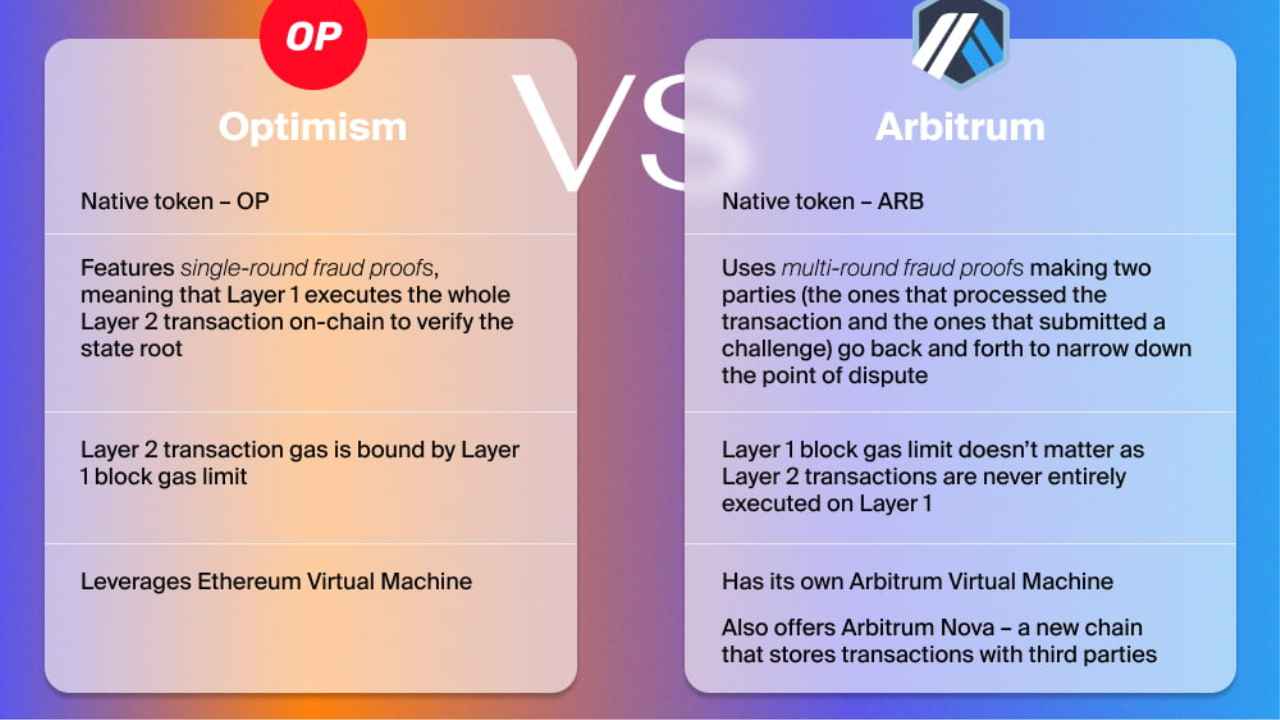
Arbitrum runs on Nitro, its custom execution engine, paired with something called BoLD, a multi round interactive fraud proof system. Translation: when something needs to be disputed, Arbitrum narrows the argument down in stages instead of resubmitting the whole transaction to Ethereum. That keeps dispute costs low, and disputes are rare anyway, so it barely matters day to day. What matters is the batching efficiency it enables.
Real numbers as of this year:
- Simple ETH transfer: $0.02 to $0.08
- Token swap (Uniswap style): $0.15 to $0.40
- Adding LP liquidity: $0.50 to $1.00
- Average simple transaction: sits around $0.005 to $0.04 on quiet days
Arbitrum also carries the deepest DeFi liquidity of any L2. GMX, Uniswap, Aave, Camelot and Pendle all run heavy volume here. More volume spread across the same blob capacity generally means better cost efficiency per transaction, which is part of why Arbitrum tends to edge out Optimism on price.
Optimism Fees in 2026
Optimism runs the OP Stack, the same base architecture powering Base, Worldchain, Soneium, Unichain and over 30 other chains under the Superchain umbrella. It uses a single round fault proof system through its Cannon fault proof VM, simpler than Arbitrum’s approach, though disputes that do occur can settle a touch slower since they go straight to Ethereum rather than narrowing in rounds first.
Real numbers as of this year:
- Simple ETH transfer: $0.05 to $0.10
- Token swap (Uniswap style): $0.25 to $0.50
- Adding LP liquidity: $0.60 to $1.20
- Average simple transaction: usually $0.05 to $0.25
Here’s what’s interesting though. Optimism’s Superchain design means Base, Soneium and the other OP Stack chains share blob posting infrastructure. So while OP Mainnet itself runs slightly pricier than Arbitrum, some of its sibling chains, Base especially, actually undercut both networks on basic transfers. If your only goal is the cheapest possible send, the real answer sometimes isn’t Arbitrum or Optimism. It’s Base. But that’s a different comparison for a different day.
Arbitrum vs Optimism: Side by Side Fee Comparison
| Action | Arbitrum One | Optimism (OP Mainnet) | Cheaper Option |
|---|---|---|---|
| Simple ETH transfer | $0.02 to $0.08 | $0.05 to $0.10 | Arbitrum |
| Token swap | $0.15 to $0.40 | $0.25 to $0.50 | Arbitrum |
| Add LP liquidity | $0.50 to $1.00 | $0.60 to $1.20 | Arbitrum |
| Bridge from Ethereum | $0.03 to $0.08 | $0.05 to $0.10 | Arbitrum |
| TVL (2026) | $13B to $18B | $6.5B to $8.5B | Arbitrum leads |
| Withdrawal to L1 | ~7 days (or fast bridge) | ~7 days (or fast bridge) | Tie |
| Native token | ARB | OP | N/A |
A note on that withdrawal line, because it trips people up. Both networks use the same seven day challenge window for the slow, native path back to Ethereum. Fast bridges exist for both and cost extra to skip the wait. Neither chain has an edge here. It’s identical exposure either way.
Why the Fee Gap Actually Exists
People assume fee differences come down to marketing or hype. Mostly it’s plumbing. Three real reasons drive the gap:
- Batch efficiency. Arbitrum’s higher transaction volume means more activity gets compressed into each blob posted to Ethereum, spreading the cost thinner per user.
- Proof system design. BoLD’s staged dispute resolution on Arbitrum tends to run leaner than OP’s single round approach when contested, though contested transactions are a small slice of total activity for both.
- Priority fee competition. Arbitrum sees heavier MEV and bot activity from its DeFi volume, which sounds like it should push fees up, but the deeper liquidity and higher throughput more than offset it in practice.
None of this makes Optimism “worse.” It makes it architecturally different, and the trade offs it makes buy something else: a tightly coordinated ecosystem of chains that all speak the same language and can move liquidity between each other with less friction.
Beyond Just Fees: What You’re Actually Paying For
Cheapest isn’t always the right question. A few things worth weighing alongside the raw numbers:
- DeFi depth. Arbitrum has more protocols, deeper order books, tighter slippage on large trades. If you’re moving real size, that matters more than a $0.05 fee difference.
- Ecosystem reach. Optimism’s Superchain means your app, once built on OP Stack, can expand across Base, Soneium, Unichain and others with shared tooling. Arbitrum’s Orbit chains offer something similar but with a smaller network so far.
- Grants and funding. Optimism’s RetroPGF program has funneled real money back to public goods builders. Arbitrum runs its own grant programs too, but the philosophy differs, Optimism leans harder into “fund what already worked.”
- Governance culture. OP’s citizen house and token house structure is more experimental. Arbitrum DAO governance is more directly token weighted.
Which One Should You Actually Use
Honestly, for casual use, the fee gap between these two won’t make or break your month. A few cents times a handful of transactions isn’t life changing money for most people.
Pick Arbitrum if:
- You’re trading DeFi with any real size
- You want the deepest liquidity and tightest spreads
- You’re doing frequent transactions where small fee gaps compound
Pick Optimism if:
- You’re building or using apps across the Superchain (Base, Soneium, Unichain)
- You care about where protocol revenue goes (RetroPGF funding public goods)
- You’re already embedded in the OP ecosystem for other reasons
Pick Base instead if:
- Your only priority is the absolute lowest possible fee for basic sends
- You’re coming from Coinbase and want the smoothest onboarding
FAQ
Is Arbitrum cheaper than Optimism in 2026? Yes, generally. Arbitrum runs a few cents cheaper than Optimism (OP Mainnet) for the same actions, transfers, swaps and LP adds, most of the time. The gap is small but consistent.
Why did both networks get so much cheaper recently? Ethereum’s Dencun and Fusaka upgrades introduced and then expanded blob space, a cheaper data lane built specifically for rollups like Arbitrum and Optimism to post their transaction batches to Ethereum. That change cut fees on both networks by well over 90% compared to before 2024.
Is Base cheaper than both Arbitrum and Optimism? Often, yes, for simple sends specifically. Base runs on the same OP Stack as Optimism but frequently posts the lowest fees among all three for basic transfers, sometimes under $0.01.
Does the withdrawal time differ between Arbitrum and Optimism? No. Both use a roughly seven day challenge window for the native, no extra fee path back to Ethereum mainnet. Fast bridges are available on both if you don’t want to wait, at an added cost.
Which chain has more total value locked in 2026? Arbitrum, by a clear margin. Arbitrum’s TVL sits around $13 billion to $18 billion depending on the tracker, while Optimism’s OP Mainnet sits closer to $6.5 billion to $8.5 billion. Combined Superchain TVL across all OP Stack chains narrows that gap somewhat.
Should fees alone decide which L2 I use? Probably not. The difference between Arbitrum and Optimism on fees is real but small. What app you’re using, where the liquidity lives and which ecosystem you’re already in should weigh more than a few cents per transaction.