You’re scrolling Telegram at 11pm and someone drops a screenshot. “New RBI notice, all crypto exchanges shutting down by Friday.” Your stomach drops before your brain even catches up. You open five tabs. Nobody’s linking the actual notice. Just the screenshot, forwarded a dozen times, each caption a little more panicked than the last.
That moment, the one where you’re about to make a decision based on something you haven’t actually confirmed, is exactly where this guide lives.
Crypto legal news moves fast, and honestly, a lot of it is just noise dressed up as fact. Real regulatory shifts happen constantly in 2026, from MiCA enforcement in Europe to SEC rule changes in the US to tax updates in India. But so do fake ones, and the fake ones often spread faster because fear travels quicker than facts.
This crypto explained guide walks through exactly how to check whether a regulatory claim is real, where the official sources actually live, and what red flags should make you pause before you sell, transfer, or panic.
Related Readings:
Why Fake Regulatory News Spreads So Easily in Crypto
Think about it this way. Crypto investors are already primed to expect sudden regulatory shocks. China banned mining. India threatened a blanket tax. The US flip flopped on ETF approvals for years. So when a new claim shows up, it doesn’t sound implausible. It sounds like Tuesday.
Scammers know this. They don’t need to convince you of something outlandish. They just need to nudge an existing fear and give it a deadline. “Comply by this date or lose access” works because it borrows credibility from real regulatory patterns while skipping the part where you’d normally check the source.
And the platforms where crypto news actually spreads, X, Telegram, WhatsApp groups, don’t have much friction built in. A screenshot with an official looking seal can travel through thousands of phones before anyone thinks to ask where it originated.
Real Examples From 2026 Worth Knowing
This isn’t theoretical. Here’s what’s actually happened this year.
In late July 2026, the US IRS Criminal Investigation division confirmed that fraudsters were mailing physical letters to crypto holders demanding they register for something called a “Digital Asset Compliance Portal.” The letters looked official, included QR codes, and pushed victims toward a spoofed IRS.gov lookalike site. The IRS was blunt about it: no such portal exists, and the agency does not send crypto enrollment demands by mail.
Around the same time, Europe saw its own version. As MiCA’s transitional deadline passed on July 1, 2026, ESMA and industry watchdogs flagged a surge in scammers impersonating EU regulators and licensing authorities, pressuring firms and investors to pay fake compliance fees or move assets to “approved” platforms that were nothing of the sort. The confusion around who was actually authorized under MiCA gave fraudsters cover to sound convincing.
India has its own history here too. SEBI has repeatedly warned investors about fraudsters using its letterhead, logo, and official seal to demand penalty payments or compliance fees. And earlier this year, the Press Information Bureau’s Fact Check Unit had to publicly debunk a fake legal notice circulating on social media that claimed to come from a cybercrime coordination body. None of it was real. All of it looked real enough to fool people.
The pattern across every one of these cases is the same. Official looking format, urgent deadline, and a channel (email, WhatsApp, a mailed letter) that real regulators rarely or never use for this kind of thing.
The Step by Step Way to Verify a Regulatory Claim
Here’s the actual process. Save this, honestly, because you’ll need it again.
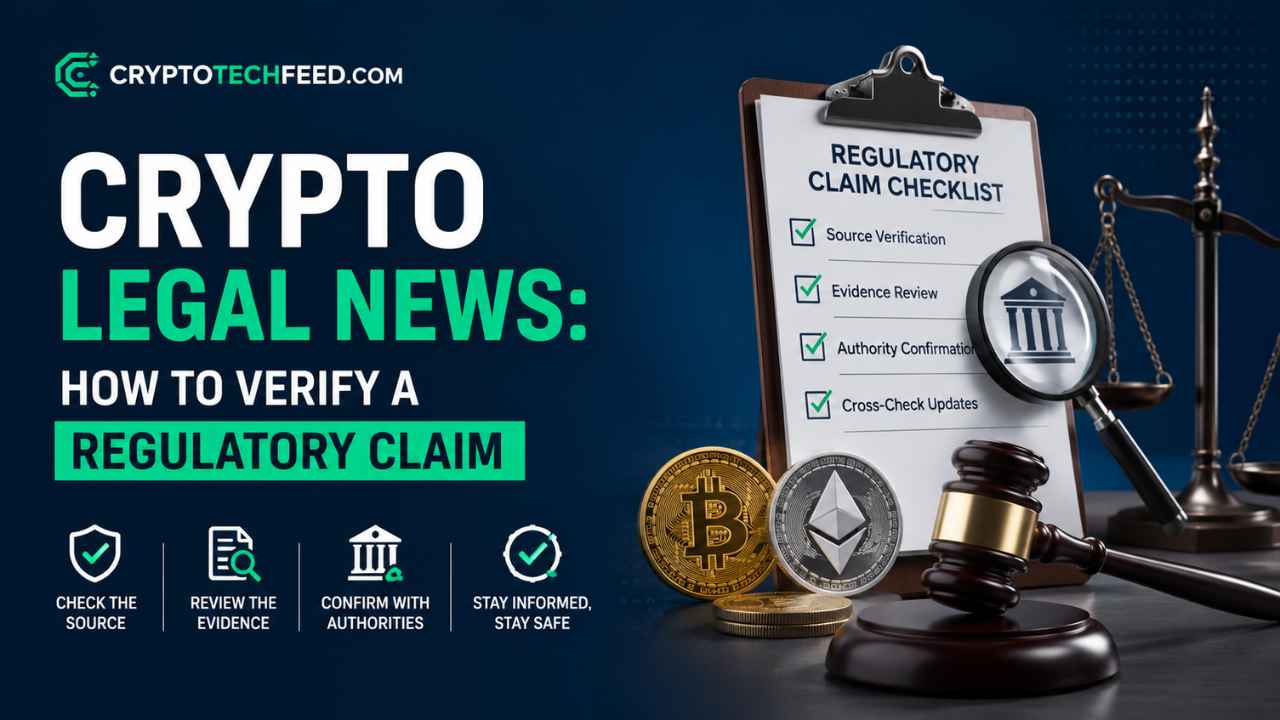
Step 1: Identify exactly which regulator is being named. Is it the SEC, RBI, SEBI, FIU IND, ESMA, or a specific national authority under MiCA? Vague claims like “the government has banned crypto” without naming a specific body are already a red flag.
Step 2: Go directly to that regulator’s official website. Don’t click the link in the message. Type the URL yourself or search for it fresh. Regulators publish circulars, press releases, and enforcement actions on their own sites, usually under a newsroom or press release section.
Step 3: Search the regulator’s press release archive for matching language. If RBI or SEBI actually issued something, it will show up in their own publications, not just as a forwarded screenshot. No match on the official site is a strong signal the claim is fabricated.
Step 4: Cross check with at least two established news outlets. Reuters, Bloomberg, CoinDesk, and major Indian financial dailies will report genuine regulatory action within hours. If only obscure Telegram channels are talking about it, that tells you something.
Step 5: Check the date and jurisdiction. A lot of fake claims recycle old, real news and reattach a new date or apply a US rule to Indian investors, or vice versa. Confirm the notice actually applies to your country and hasn’t already expired or been withdrawn.
Step 6: Look for a verifiable reference number. Genuine circulars and orders carry a document number you can search independently. No number to check means treat the claim as unconfirmed.
Step 7: Never act through the channel that delivered the claim. If a message tells you to move funds or pay a fee using a link it provides, don’t. Find the regulator’s real portal separately and check from there.
Where to Check Official Sources
| Regulator or Body | What They Actually Publish | Where to Verify |
|---|---|---|
| RBI (India) | Circulars, press releases, monetary policy notes | rbi.org.in press release section |
| SEBI (India) | Circulars, investor alerts, enforcement orders | sebi.gov.in circulars and orders archive |
| FIU IND (India) | Registered entity lists, compliance orders | fiuindia.gov.in |
| SEC (US) | Rules, enforcement actions, litigation releases | sec.gov newsroom |
| CFTC (US) | Enforcement actions, advisories | cftc.gov press releases |
| ESMA (EU) | MiCA authorization registers, guidance | esma.europa.eu |
| Income Tax Department (India) | Tax circulars, notifications | incometax.gov.in |
Bookmark the ones relevant to where you trade. It takes ten seconds to check once you know where to look, and that ten seconds can save you from acting on something completely made up.
Red Flags That Signal a Fake Regulatory Claim
A few patterns show up again and again once you start paying attention.
- The message creates urgency with a tight deadline, often within 24 to 48 hours. Real regulatory transitions, like MiCA’s, get announced months in advance with public consultation periods, not surprise ultimatums.
- It arrives through an unofficial channel. Regulators publish on their own websites first. They don’t lead with a WhatsApp forward or a DM from an account you don’t recognize.
- It asks for direct action, like a payment, a wallet transfer, or login credentials. Genuine compliance notices tell you what changed. They don’t ask you to send crypto to “avoid penalties.”
- It uses official logos and seals but a slightly off domain name. Scammers are good at visuals, worse at getting the actual URL right, so check that closely.
- It can’t be found anywhere else. If a claim this significant were real, credible outlets and the regulator’s own site would already be covering it.
What This Means for Indian Crypto Investors Specifically
If you’re trading on an FIU registered exchange like CoinDCX or Mudrex, you’re already operating inside a framework where genuine regulatory updates get communicated clearly, through the exchange itself and through official government channels. That’s actually useful. It means your exchange has a direct compliance relationship with FIU IND, and any real regulatory shift affecting you will usually reach you through your exchange’s own notices, not a random forward.
India’s crypto tax rules, the 30% flat tax and 1% TDS, are well documented and haven’t changed overnight without formal notification through the Finance Bill process. Any claim of a sudden new tax rate or an immediate ban should be checked against the Income Tax Department’s own site and against what your exchange is actually telling its users, not against a screenshot with no source.
Frequently Asked Questions
How can I tell if crypto regulatory news is fake? Check whether the claim appears on the named regulator’s own official website and whether at least two established news outlets are reporting it independently. If it only exists as a forwarded screenshot with no traceable source, treat it as unverified.
Do Indian regulators like RBI or SEBI ever contact investors directly by message? No. Both RBI and SEBI have publicly warned that they don’t demand payments or personal information through WhatsApp, email links, or social media messages. Any communication asking you to pay a fee or click a link to avoid penalties should be treated as a scam.
What should I do if I already clicked a link from a fake regulatory notice? Don’t enter any wallet credentials, seed phrases, or personal information if you haven’t already. If you have, change your exchange passwords immediately, enable two factor authentication, move funds to a fresh wallet if you suspect compromise, and report the incident to your exchange and to India’s cybercrime portal at cybercrime.gov.in.
Is it safe to trust crypto news aggregator sites over official regulator sites? Aggregator sites are useful for spotting a story quickly, but they should point you back to a primary source. Treat any crypto news claim as unconfirmed until you’ve traced it to the regulator’s own publication or a verifiable court or government document.
How often does real crypto regulation actually change? More often than people expect, but almost never overnight. Frameworks like MiCA in the EU or India’s tax rules go through formal drafting, consultation, and phased implementation over months. Sudden, dramatic single day changes without any prior public process are unusual enough to warrant extra scrutiny.