A fresh token hits the trending page, the chart is green, and your group chat is already talking about it. This is exactly the moment most losses happen. New listings move fast, and the excitement is designed to make you skip the boring part. But the boring part, the research, is the only thing standing between you and a token that quietly drains to zero within a week.
This guide breaks down a real new token listing checklist, the kind a careful trader actually runs before buying, not after. Think of it as your 2026 crypto guide to slowing down for ten minutes before you speed up your entry.
Read: What Are Crypto Airdrops
Why Due Diligence Matters More With New Listings
An exchange listing is not a stamp of safety. Even major platforms only check for basic compliance, technical readiness, and liquidity, not whether the project will actually succeed. Coinbase itself notes that meeting business criteria simply opens the door to a review, it does not guarantee the token is a good investment. Thousands of tokens launch every month, and most fail within their first year. The listing gets you access. It does not get you an edge.
That edge comes from research you do yourself, before the hype cycle peaks and before the early holders start exiting into your buy orders.
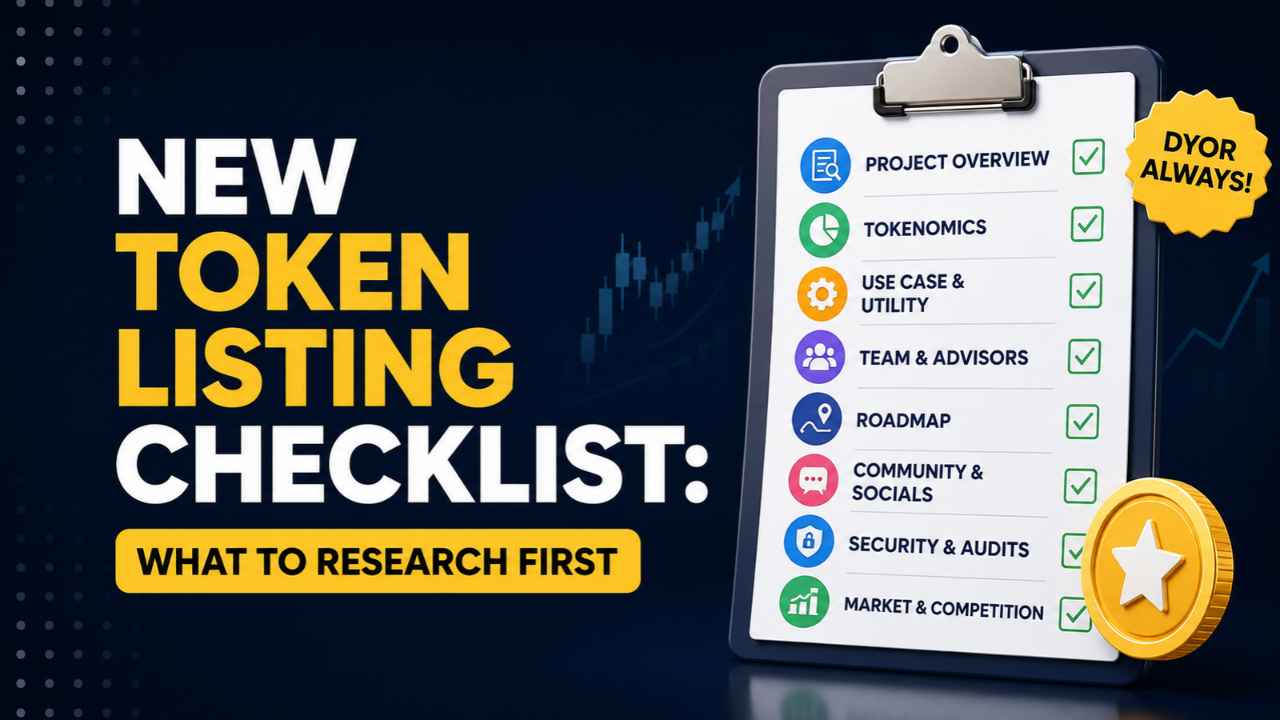
New Token Listing Checklist: What to Research First
1. Team and Founder Background
Start with who is actually building the thing. Search names on LinkedIn and GitHub, check past projects, and see if the team has shipped working products before or only marketing decks. Anonymous teams are not automatically scams, but they raise the bar for everything else on this list. If the founders will not put their names on the project, ask why, and weigh that against how much of your own money you are willing to risk on trust alone.
2. Tokenomics and Supply Distribution
Pull up the token’s supply breakdown. How much sits with the team, the treasury, and early investors versus the public? A healthy launch usually keeps insider allocation reasonable and spreads the rest across the community. If a handful of wallets hold most of the supply, that is concentration risk, and it means a small group can move the price whenever they choose. Check this on a block explorer, not just the whitepaper, since numbers on paper and numbers on chain do not always match.
3. Smart Contract Audit and Security
No audit, no trust, at least not yet. Reputable projects publish third party audit reports from known firms, and serious teams follow up with bug bounty programs once contracts go live. Read the audit summary yourself instead of trusting a badge on the homepage. Look for unresolved high severity findings, since a published audit with open critical issues is barely better than no audit at all. Rug pulls and honeypot contracts remain common in 2026, and a verified, audited contract is your first real filter against them.
4. Liquidity and Exchange Type
Where a token trades changes how you should research it. DEX listings on platforms like Uniswap or Raydium are usually permissionless, meaning anyone can list anything, so liquidity depth and lock status matter enormously. CEX listings involve a formal review of the project’s tech, tokenomics, and compliance, which adds a layer of screening but still is not a guarantee. Either way, check whether liquidity pool tokens are locked, for how long, and whether trading volume looks organic or wash traded.
5. Use Case and Product Readiness
Ask the uncomfortable question early: does this project actually need a blockchain, or is that just decoration on top of a normal app? Strong projects lean on blockchain specific advantages such as transparent verification, trustless execution, or programmable incentives. If a regular database would solve the same problem more cheaply, be skeptical of the token’s long term utility, no matter how polished the website looks.
6. Vesting Schedules and Unlock Events
Large, sudden token unlocks are one of the most predictable reasons new listings crash. Check the vesting schedule for team and investor allocations, and note upcoming unlock dates before you buy. A staggered, transparent unlock visible on chain is a good sign. A cliff unlock that dumps a huge percentage of supply on a single date is a warning that price could fall sharply right after, regardless of how the project is performing.
7. Community and Social Signals
Genuine communities ask hard questions and tolerate criticism. Manufactured hype communities delete critical comments and post nothing but price talk. Check Discord and Telegram activity for real conversation rather than bot chatter, and look at whether the team actually answers technical questions or only posts announcements. Community size means little on its own, engagement quality tells you far more about whether people believe in the product or just the price.
8. Regulatory and Compliance Status
Regulatory scrutiny on new tokens has increased sharply in 2026, with frameworks like the EU’s MiCA and the US GENIUS Act shaping how projects can operate and market themselves. Check whether the project has addressed KYC and AML requirements, and whether it operates on exchanges registered with relevant authorities. For Indian investors, sticking to FIU registered platforms such as Mudrex or CoinDCX adds a compliance layer that unregistered platforms simply do not offer.
Also Read: How to Find New Crypto Coin Listings Before Trading
CEX vs DEX Listings: What Changes in Your Research
| Factor | CEX Listing | DEX Listing |
|---|---|---|
| Access | Requires exchange approval and review | Usually permissionless, anyone can list |
| Due diligence done for you | Team, tokenomics, and compliance checked | None, entirely on the buyer |
| Liquidity source | Exchange facilitated market making | Depends on team seeded liquidity pools |
| Speed to trade | Slower, listing takes weeks or months | Can trade within minutes of contract deployment |
| Risk level | Lower baseline, still needs personal research | Higher baseline, honeypots and rug pulls more common |
Red Flags to Watch Before a New Token Listing
Certain patterns show up again and again in failed launches. Watch for teams that refuse to share previous audit results or financial documentation, unresolved legal disputes among founders, and tokenomics that promise guaranteed passive returns, which is often a sign the token functions like an unregistered security. Unlocked liquidity pools, copy pasted whitepapers, and social channels full of bots rather than real users are equally telling. None of these alone is proof of a scam, but two or three together should end your research right there.
Must Read: Hot Wallet vs Cold Wallet
A Practical Pre Buy Checklist
Before placing an order on any new listing, run through this in order. Confirm the team’s identity and track record. Pull the tokenomics and check wallet concentration on chain. Read the audit summary, not just the badge. Check whether liquidity is locked and for how long. Look up upcoming unlock dates. Scan the community for genuine engagement. Confirm the exchange and jurisdiction are compliant with relevant regulations. If any single step raises doubt, treat that as your answer rather than talking yourself past it.
FAQ
What is the first thing to check before buying a new token listing? Start with the team’s background and the tokenomics, specifically how much supply insiders hold. These two factors surface most red flags early, before you spend time on deeper technical research.
Does an exchange listing mean a token is safe to buy? No. Exchanges review basic compliance and liquidity standards, but that review does not evaluate whether the project will succeed. Independent research remains essential even after a token gets listed on a major platform.
How do I know if a smart contract audit is trustworthy? Check that the audit came from a recognized security firm, read the actual findings rather than just the summary badge, and confirm any high severity issues were resolved before launch, not left open.
What is a rug pull and how do I avoid one? A rug pull happens when developers drain a token’s liquidity pool or dump their holdings, crashing the price. Checking for locked liquidity, audited contracts, and a transparent vesting schedule significantly reduces this risk.
Is it safer to buy new tokens on a CEX or a DEX? CEX listings involve a formal due diligence review, which adds a layer of screening. DEX listings are usually permissionless, meaning the research responsibility falls entirely on you, so treat every DEX listing with extra caution.
How much should I invest in a brand new token listing? Many analysts suggest limiting individual new token exposure to a small percentage of your total crypto portfolio, since new listings carry a meaningfully higher failure rate than established assets.