
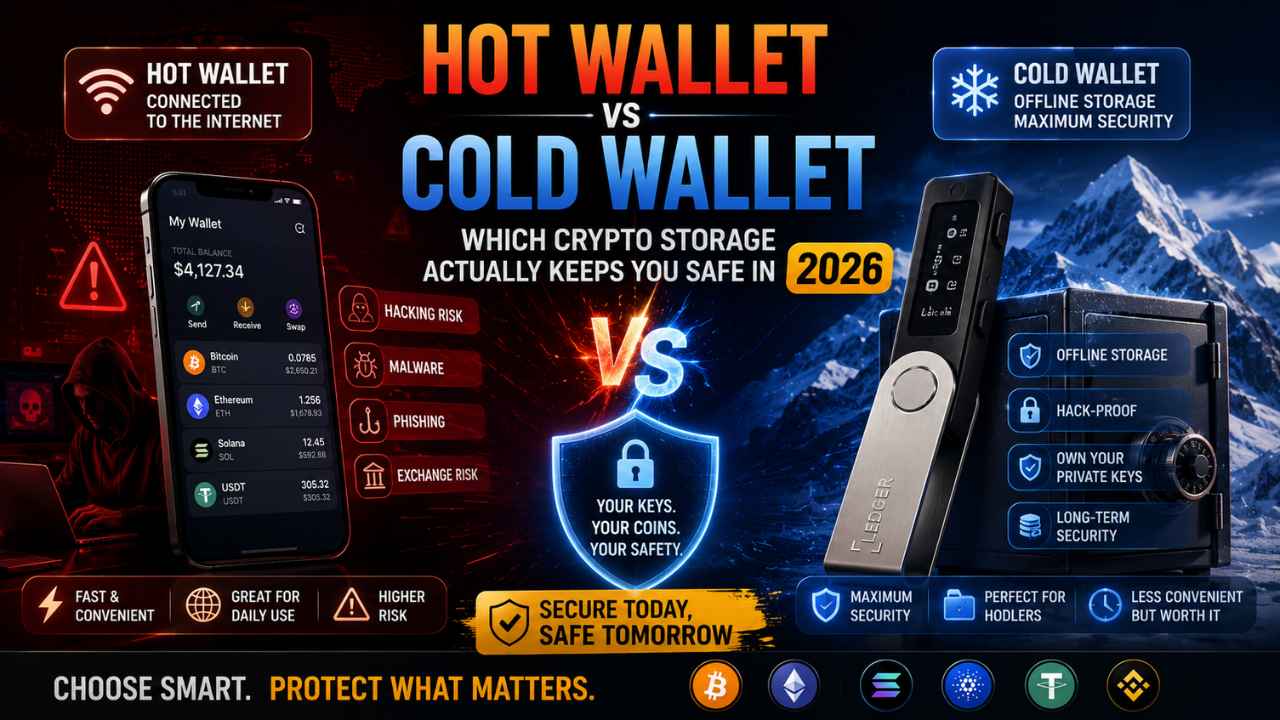
In February 2025, attackers walked away with 1.5 billion dollars worth of Ethereum from Bybit in a single breach, still the largest crypto theft in history. It did not happen because someone left a laptop unlocked in a coffee shop. It happened through compromised infrastructure surrounding cold storage itself, a reminder that even the safest label in crypto still depends entirely on how carefully it gets used. If you own any cryptocurrency at all, where you store it matters more than almost any other decision you will make, and the hot wallet versus cold wallet debate sits right at the center of that choice.
What Is a Hot Wallet
A hot wallet is any crypto wallet that stays connected to the internet, think MetaMask in your browser, Trust Wallet on your phone, or the wallet built into an exchange app. Because it is always online, sending, receiving, and swapping tokens takes seconds, which makes hot wallets the natural choice for active trading, DeFi farming, NFT minting, and daily spending. That same always on convenience is also the weakness. Anything connected to the internet is reachable by phishing links, malicious browser extensions, and fake apps, which is exactly why hot wallets remain the most frequently targeted storage method every single year.
What Is a Cold Wallet
A cold wallet keeps your private keys completely offline, usually on a dedicated hardware device like a Ledger Nano X or a Trezor Model T. These devices generate and store keys inside a secure chip that never exposes them to an internet connected computer, even while you are using it. You plug the device in only to sign a transaction, approve it on the screen, then disconnect. Nobody sitting anywhere in the world can remotely reach into a device that was never listening. Cold wallets trade a bit of daily convenience for what most security researchers still consider the closest thing crypto has to a guarantee.
Also Read: How to Set Up a MetaMask Wallet: Complete Step by Step Guide for 2026
Hot Wallet vs Cold Wallet, Side by Side
| Factor | Hot Wallet | Cold Wallet |
|---|---|---|
| Internet connection | Always online | Offline by design |
| Best for | Daily trading, DeFi, small balances | Long term holding, large balances |
| Speed | Instant transactions | Slower, requires physical device |
| Cost | Usually free | One time hardware cost |
| Main risk | Phishing, malware, fake apps | Physical loss, backup mistakes |
| Ideal holding size | Amounts you use regularly | Anything you would hate to lose |
What the 2025 and 2026 Hack Data Actually Shows
The numbers tell a fairly blunt story. CertiK’s security research counted 630 Web3 security incidents through 2025, with 59 percent traced back to access control failures rather than clever code exploits, meaning most losses came down to human error, not unbreakable cryptography being cracked. Phishing alone drained roughly 411 million dollars in the first half of 2025, almost entirely from hot wallet users who signed a malicious transaction or typed a seed phrase into a fake website. Lazarus Group’s crypto theft escalated from 660 million dollars in 2023 to 1.34 billion in 2024, then blew past that entire figure with one single 2025 breach. Direct compromises of properly stored cold wallets, by contrast, stayed statistically negligible across the same period.
When to Use a Hot Wallet
Hot wallets earn their keep for anything time sensitive or small enough that losing it would sting, not devastate. If you are minting an NFT the moment a mint goes live, farming a new DeFi protocol, or swapping tokens across chains throughout the week, a cold wallet’s extra steps would slow you down for no real benefit. Developers testing smart contracts and anyone holding pocket money sized amounts for daily use fall into the same category. The general rule that has held up well through 2026, treat a hot wallet the way you would treat cash in your physical wallet, useful for spending, never for your entire savings.
When a Cold Wallet Is Non Negotiable
Once your holdings cross a few thousand dollars, or represent money you genuinely cannot afford to lose, a cold wallet stops being optional. Long term holders who plan to sit on an asset for months or years gain nothing from instant access and everything from removing themselves as an online target. The hardware wallet market itself reflects this shift, growing sharply through 2025 and projected to keep climbing through 2026 as more retail investors move meaningful holdings off exchanges and hot wallets entirely. If crypto makes up a real slice of your net worth, a cold wallet is less a luxury and more basic financial hygiene.
The Hybrid Approach Most Experienced Holders Use
Almost nobody serious about crypto in 2026 picks one wallet type and calls it done. The common pattern splits holdings by purpose, a hot wallet holding a small working balance for trading and DeFi, and a cold wallet locked away holding everything meant for the long haul. Some holders add a third layer, keeping a modest balance on a reputable exchange for quick liquidity, while the bulk sits in cold storage untouched for months. Indian investors using FIU registered platforms like Mudrex or CoinDCX often follow exactly this pattern, trading actively on the exchange while withdrawing larger holdings to a hardware wallet once a position matures.
Frequently Asked Questions
Is a hot wallet or cold wallet safer? Cold wallets are considered safer because private keys never touch an internet connected device, while hot wallets stay exposed to phishing and malware around the clock.
Do I need a cold wallet if I only have a small amount of crypto? Not necessarily. Most guides suggest a cold wallet becomes worthwhile once your holdings exceed a few thousand dollars or represent money you cannot afford to lose.
Can a cold wallet still be hacked? Direct hacks of properly stored cold wallets are rare, though losses can still happen through physical theft, lost backups, or compromised surrounding infrastructure, as seen in the 2025 Bybit breach.
What is the best hardware wallet in 2026? Ledger and Trezor remain the most widely used hardware wallets, with Ledger offering broader coin support and Trezor favored for open source firmware.
Can I use both a hot wallet and a cold wallet together? Yes, and most experienced holders do exactly that, keeping a small working balance in a hot wallet while storing the majority of their holdings in cold storage.