I still remember the first time a friend showed me his exchange balance and called it “his crypto.” It wasn’t his crypto. It was a number on someone else’s server, and that someone else controlled the keys. He found this out the hard way when the exchange froze withdrawals for eleven days during a liquidity scare. Nothing was stolen. But for eleven days, his money wasn’t really his.
That’s the whole argument for a hardware wallet in one story. Not the FTX collapse, not some abstract lecture about “not your keys, not your coins.” Just the simple, gut level discomfort of watching a withdraw button spin and do nothing.
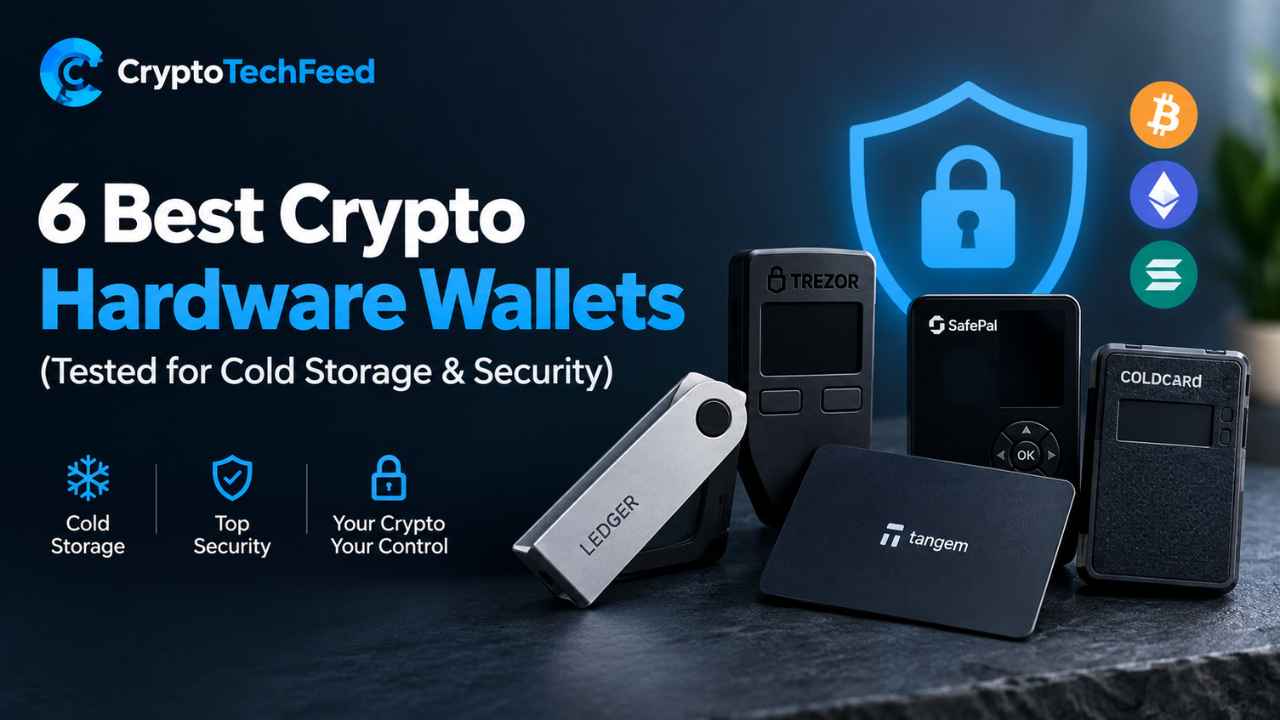
So I spent the last few weeks going hands on with six of the most talked about hardware wallets on the market right now, the ones that actually come up when people search for the best crypto hardware wallet, and the ones that keep getting pitted against each other in the ledger vs trezor vs tangem debate. I set each one up from scratch, sent test transactions, poked at the firmware, and read through every published security certification I could find. Here’s what actually held up.
Why a Hardware Wallet Beats Everything Else for Storing Crypto
A hot wallet, whether it’s an app on your phone or an account on an exchange, keeps your private keys on a device that talks to the internet. That’s convenient. It’s also exactly why it gets targeted. Chainalysis and TRM’s 2026 crypto crime data put personal wallet compromise losses at over 700 million dollars in a single year, and infrastructure level attacks on exchanges and custodians accounted for roughly three quarters of all hack losses tracked.
A hardware wallet flips that setup. Your private keys get generated and stored inside a small offline chip, and they never leave it. When you send a transaction, the unsigned data goes to the device, gets signed inside that isolated chip, and only the signed, harmless output comes back out. Malware on your laptop can watch every keystroke you make and it still can’t get at the key sitting inside the secure element. That’s the whole trick, and it’s a genuinely good one.
How I Actually Tested These
I looked at four things that matter more than marketing copy: the secure element chip and its certification level, whether the firmware is open source and independently auditable, how the device actually connects (Bluetooth, USB, NFC, or fully air gapped QR codes), and real world price against what you’re getting. I set up each wallet with a fresh seed phrase, restored a test wallet from a backup phrase, and sent a handful of small transactions across Bitcoin and an EVM chain to see how the signing flow actually felt on device.
Best Crypto Hardware Wallet Comparison Table
| Wallet | Price | Secure Element | Open Source | Connection | Best For |
|---|---|---|---|---|---|
| Trezor Safe 3 | ~$59 | EAL6+ | Fully open source | USB-C only | Best budget pick |
| Ledger Nano X | ~$149 | CC EAL6+ | Partially open source | USB-C + Bluetooth | Best all-around ecosystem |
| Tangem 3-Card Set | ~$50 | EAL6+ | Partially open source | NFC via phone app | Cheapest cold storage |
| Keystone 3 Pro | ~$149 | Triple EAL5+ chips | Fully open source | QR code, air gapped | Best air gapped wallet |
| Coldcard Mk5 / Q | ~$180-$250 | Dual secure elements | Fully open source | USB, microSD, QR on Q | Safest way to store Bitcoin |
| NGRAVE ZERO | ~$398 | EAL7 certified | Partially open source | QR code, air gapped | Highest security rating overall |
The 6 Best Crypto Hardware Wallets, One by One
1. Trezor Safe 3, the Best Budget Hardware Wallet
Trezor basically invented this product category back in 2014, and the Safe 3 is where that experience shows up in the smartest possible way. It costs around 59 dollars, runs a fully open source firmware stack that anyone can audit line by line, and it finally added a proper EAL6+ certified secure element after years of critics pointing out the earlier models didn’t have one.
Setup took me about ten minutes, most of which was writing down the recovery phrase twice because I’m paranoid like that. There’s no Bluetooth, no NFC, just a USB-C cable and two physical buttons. For a first hardware wallet, or for someone who just wants their long term Bitcoin and Ethereum sitting somewhere boring and safe, I don’t think you can do much better for the money.
2. Ledger Nano X, the Best Ecosystem for Everyday Use
Ledger sells more hardware wallets than anyone else, and using the Nano X for two weeks reminded me why. Ledger Live supports over 15,000 coins and tokens, it connects over Bluetooth so you can sign transactions from your phone without a cable dangling off it, and the whole app experience feels like it was actually designed by people who use crypto daily, not just engineers.
The catch, and it’s worth being honest about it since this is a ledger vs trezor vs tangem comparison, is that Ledger’s firmware isn’t fully open source the way Trezor’s or Keystone’s is. Ledger argues this protects against certain attack vectors on the secure element itself, and there’s a real technical case for that. But if open source transparency is your top priority, this isn’t your wallet. If you want the smoothest daily driver with the widest coin support, it’s hard to beat.
3. Tangem, the Cheapest Cold Storage Wallet That Actually Works
Tangem throws out the seed phrase model entirely, and honestly, I was skeptical until I tried it. You get a set of two or three NFC cards, each one generating its own private key inside an EAL6+ certified chip, and you tap a card against your phone to sign transactions through the Tangem app. No cable, no screen, no seed phrase to write down on paper and hide in a drawer.
A three card set runs about 50 dollars, which makes it the cheapest cold storage wallet on this whole list by a real margin. Lose one card, and the other two still restore full access. The tradeoff is you’re trusting a newer, less battle tested recovery model instead of the industry standard BIP39 seed phrase. For someone just getting off exchanges and wanting dead simple offline storage, it’s genuinely great. For someone with serious long term holdings, I’d still lean toward a seed phrase device.
4. Keystone 3 Pro, the Best Air Gapped Crypto Wallet
This is where things get serious about isolation. Keystone 3 Pro has no USB data connection, no Bluetooth, no NFC. Everything moves between your phone and the device as QR codes on screen, which means there is no wired or wireless path for malware to travel across at all. It packs three separate secure element chips, fingerprint authentication, and fully open source firmware that’s been reviewed by outside security researchers.
At around 149 dollars it undercuts most other air gapped crypto wallet options while matching or beating their spec sheets. It pairs cleanly with MetaMask and other software wallets for DeFi use, which a lot of pure air gapped devices don’t bother supporting well. If the phrase “air gapped” is why you’re reading this article, start here.
5. Coldcard Mk5 / Q, Still the Safest Way to Store Bitcoin
Coldcard doesn’t do multi coin support, and it doesn’t apologize for it. This is a Bitcoin only device built for people who treat self custody like a discipline, not a checkbox. It runs dual secure elements from two different manufacturers so a flaw in one chip’s design doesn’t compromise the whole device, and the Q model adds a physical keyboard and QR based air gapped signing on top of the microSD workflow the Mk5 already offers.
If you’re asking what’s the safest way to store bitcoin specifically, and you don’t care about holding fifty different altcoins on the same device, Coldcard is the answer serious Bitcoiners keep coming back to. It’s not beginner friendly. The learning curve is real. But that friction is sort of the point.
6. NGRAVE ZERO, the Highest Security Rating You Can Buy
NGRAVE ZERO is the only consumer hardware wallet I could find that’s certified to EAL7, which is the highest security evaluation level used commercially, one tier above what Ledger, Trezor, and Tangem all carry. It’s fully air gapped, uses QR codes for every transaction, and generates your seed phrase through a physical dice like process called the Perfect Keys system rather than relying purely on the chip’s internal randomness.
At around 398 dollars it’s the most expensive wallet on this list, and honestly, most people don’t need EAL7 security for a few thousand dollars in crypto. But if you’re storing something closer to a retirement fund, or you’re simply the type who wants the best certification available regardless of cost, NGRAVE ZERO is that wallet.
Ledger vs Trezor vs Tangem: Which Should You Actually Buy
People ask me this constantly, so let’s settle it plainly. Pick Ledger if you want the broadest coin support and the most polished mobile app experience, and you’re comfortable with a firmware model that isn’t 100 percent open source. Pick Trezor if open source transparency matters more to you than anything else, and you’re fine sticking to a USB only connection. Pick Tangem if you want the cheapest, simplest possible entry into cold storage and you’re not moving six figures of crypto onto it.
None of these three are wrong choices. They’re just optimized for different people, and the “best” one depends entirely on what you’re actually trying to protect and how much friction you’re willing to tolerate to protect it.
Air Gapped vs Bluetooth: What Actually Matters
Bluetooth on a hardware wallet gets a bad reputation it doesn’t fully deserve. The private key still never leaves the secure element, Bluetooth just carries the already signed, encrypted transaction data back to your phone. That said, it is technically a wireless attack surface that an air gapped device like Keystone, Coldcard, or NGRAVE simply doesn’t have at all.
For most people holding a normal amount of crypto, a certified secure element with Bluetooth is genuinely fine. For anyone storing life changing money, or anyone with a threat model that includes targeted attackers rather than random opportunists, paying the small convenience tax for a fully air gapped crypto wallet is the more defensible choice.
The Safest Way to Store Bitcoin, in Plain Terms
Buy your hardware wallet directly from the manufacturer’s official site, never from a marketplace listing where a seed phrase could’ve been tampered with before it ever reaches you. Generate your own seed phrase on the device itself, write it on metal if you can afford the backup plate, and never type it into any website, app, or “customer support” chat, ever. Split large holdings across more than one device if the amount genuinely justifies it. And test a small recovery before you trust it with real money.
That’s it. That’s the whole safest way to store bitcoin conversation. It’s not complicated. It’s just boring, and boring is exactly what you want from money you’re planning to still have in ten years.
Frequently Asked Questions
What is the best crypto hardware wallet for beginners? Trezor Safe 3 or Ledger Nano S Plus. Both sit near the 60 to 80 dollar range, both have certified secure elements, and both walk you through setup clearly enough that you don’t need to be technical to get it right.
Is Ledger or Trezor safer? Both use certified EAL6+ secure elements today. Trezor’s full open source firmware gives it an edge on transparency. Ledger’s closed source element design has its own technical security argument. Neither has had its secure element itself broken in the field.
What’s the cheapest cold storage wallet that’s actually secure? Tangem, at around 50 dollars for a three card set with an EAL6+ certified chip, is the cheapest option on this list that still meets a real security certification standard.
Do I really need an air gapped wallet? Not always. Air gapped devices like Keystone, Coldcard, and NGRAVE remove wireless attack surface entirely, which matters most for large holdings or high value targets. For smaller, everyday holdings, a certified secure element device with USB or Bluetooth is usually enough.
Can a hardware wallet be hacked? Physical, sustained access combined with extremely sophisticated lab equipment has broken older, uncertified chips in research settings. Certified secure elements (EAL6+ and above) are built specifically to resist that. Remote hacking of a properly used hardware wallet, with a device bought new and a seed phrase never entered online, is effectively not a realistic threat today.