A friend of mine texted me a screenshot last week. It was his portfolio, and one line was glowing green while everything else was red. The coin was TAO. His question was simple. “What is this thing and why does it keep going up when nothing else does?”
I get some version of that message every few weeks now. And honestly, Bittensor is one of those projects that sounds complicated until someone breaks it down without the jargon. So let’s do that. No fluff, no hype, just what Bittensor actually is and how its subnets work.
What Is Bittensor, Really?
Think of Bittensor as a marketplace. Not for coins. For intelligence.
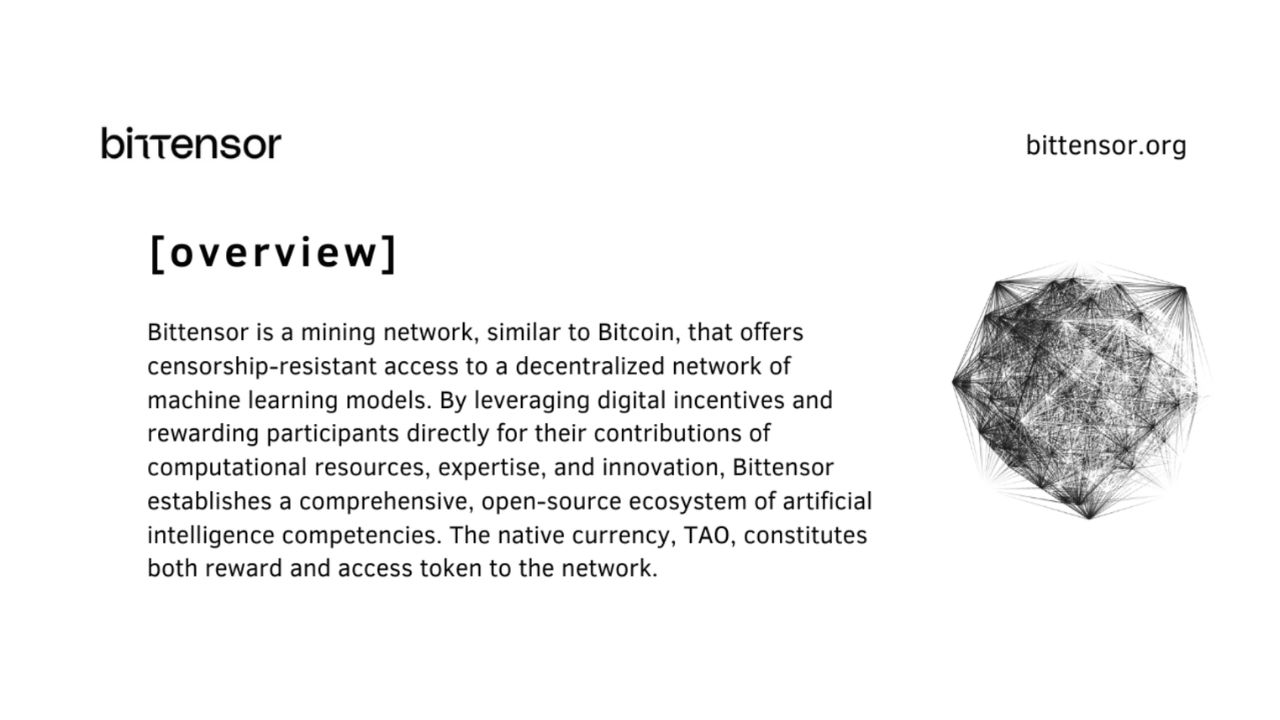
People build AI models. Other people want to use those models. Bittensor connects the two, pays the builders in TAO tokens, and does it all without a company sitting in the middle collecting fees.
Launched in 2021 with zero premine and zero VC allocation, Bittensor borrowed Bitcoin’s playbook. Fixed 21 million supply. Halving schedule. Proof of work replaced by something the team calls Proof of Intelligence. Instead of burning electricity to solve math puzzles, participants earn TAO by contributing useful machine learning work.
That’s the pitch anyway. Whether it delivers is a separate conversation, and we’ll get there.
Bittensor TAO Subnet Explained: The Actual Core Idea
Here’s where most explainers lose people. So let’s slow down.
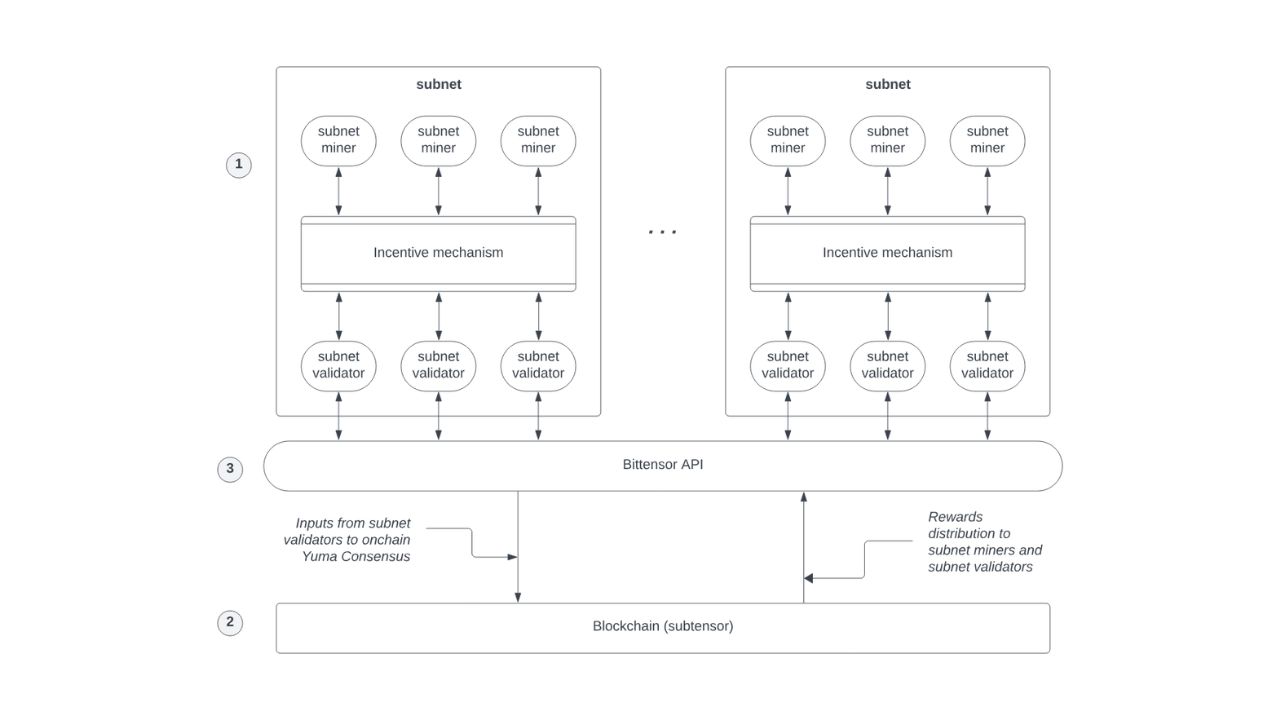
A subnet is basically a mini economy inside Bittensor. Each one focuses on a specific task. One subnet might specialize in text generation. Another handles image creation. Another does financial forecasting, or storage, or AI agent coordination. As of late 2026, Bittensor runs well over 100 active subnets, and the network’s own roadmap has talked about scaling toward 256.
Every subnet has three moving parts. Miners do the actual work. Validators judge how good that work is. And a scoring system called Yuma Consensus decides who gets paid based on those judgments. That’s the whole loop, repeated across every subnet, all day, every day.
Picture it like a hundred different talent shows running at once. Each show judges a different skill. The judges (validators) score the contestants (miners). The best performers walk away with the prize money (TAO emissions). Bittensor is basically running a hundred of these shows in parallel, all feeding back into one token.
Miners, Validators, and Who Does What
Let’s break the two main roles down properly, because people mix them up constantly.
- Miners run the actual AI work. They register on a subnet and respond to whatever task that subnet is built around. Could be answering prompts, generating images, predicting prices, or serving compute.
- Validators don’t do the work themselves. They test it. They send queries to miners, grade the responses, and submit a ranked scorecard once per cycle.
- Subnet owners design the rules. They decide what counts as good work on their subnet and set the incentive structure that miners chase.
- Stakers back validators they trust with TAO, and share in the rewards those validators earn.
Every validator on a subnet submits their own ranking. Stack all those rankings together and you get a full scoreboard. That scoreboard, weighted by how much stake each validator holds, becomes the input for Yuma Consensus.
How Yuma Consensus Actually Decides Who Gets Paid
This is the part that makes Bittensor genuinely different from a normal blockchain, so it deserves real attention.
Yuma Consensus takes every validator’s scorecard and blends them into one final ranking. It doesn’t just average everything blindly. It weighs validators by their stake and their track record. Validators whose scores consistently line up with the broader consensus earn more influence over time. Validators who drift too far from the pack, whether through bad judgment or an attempt to game the system, get discounted.
That last part matters a lot. It means a validator can’t just rubber stamp their favorite miner and expect full rewards. The system pulls outlier opinions back toward the center, which makes collusion expensive and difficult to sustain. Miners who consistently deliver quality work rise up the rankings and pull in bigger emissions. Miners who slack off or game the tests get squeezed out, quietly, without anyone needing to intervene manually.
It’s not a perfect system. Nothing is. But it’s a genuinely clever attempt to price AI output on chain, in something close to real time.
dTAO and Alpha Tokens: The 2025 Upgrade That Changed Everything
Early Bittensor had a real weakness. A small group of validators on something called the root network controlled how TAO emissions got distributed across subnets. That’s a centralization problem dressed up as decentralization, and the community knew it.
Dynamic TAO, or dTAO, launched in February 2025 to fix this. Instead of a handful of insiders deciding which subnets deserved funding, dTAO gave every subnet its own token, called an Alpha token. Each Alpha token trades against TAO in its own liquidity pool.
Here’s why that’s actually clever. If you believe a specific subnet, say a compute subnet or an inference subnet, is going to be valuable, you can buy that subnet’s Alpha token directly. Demand for the Alpha token pulls in more TAO emissions for that subnet. Weak subnets with no real demand simply starve of funding over time. It’s a market deciding winners instead of a small validator committee.
This is also why you’ll sometimes see people describe Bittensor as “129 tokens wearing one trench coat.” Kind of true. Every subnet is its own tradeable economy now, all anchored back to the root TAO supply.
TAO Tokenomics: Supply, Halvings, and Why It Matters
TAO follows Bitcoin’s supply model almost exactly, with one twist.
- Max supply: 21 million TAO, hard capped
- Emission style: Block rewards, roughly one block every 12 seconds
- Halving trigger: Total issuance crossing supply thresholds, not fixed block counts like Bitcoin
- First halving: Occurred in December 2025, cutting daily emissions from around 7,200 TAO to about 3,600 TAO
- Next halving: Triggers again once issuance crosses 15.75 million TAO
That halving trigger detail trips people up. Bitcoin halves on a fixed schedule you can basically set your watch to. Bittensor halves whenever total issuance crosses the midpoint of remaining supply. Registration burns and recycled TAO get subtracted from that issuance count, which actually stretches the timeline out further. So the next halving isn’t sitting on a neat calendar date the way Bitcoin’s is.
As of September 2026, TAO has been trading roughly in the $200 to $270 range, with a market cap hovering between $2 billion and $2.7 billion depending on which circulating supply figure a given source is using. Circulating supply estimates themselves are a bit messy right now, floating somewhere between 9.6 million and 11.3 million TAO across different trackers. Not the cleanest data picture in crypto, but not unusual for a network mid transition either.
What Are the Popular Bittensor Subnets Actually Doing?
People assume every subnet is doing something exotic. Most aren’t. A lot of the value concentrates in a handful of subnets doing very practical work.
Chutes, an inference and serverless compute subnet, has consistently ranked as one of the largest subnets by market cap. It basically rents out AI model serving capacity, letting developers run inference without owning GPU infrastructure themselves. Other notable subnets cover things like decentralized data scraping, text to image generation, financial time series prediction, and AI agent coordination frameworks.
The honest truth is that subnet quality varies wildly. Some are legitimate businesses attracting real usage. Others are thin experiments running mostly on speculative Alpha token trading rather than actual demand for the underlying work. This is exactly why dTAO’s market based funding model matters. Weak subnets are supposed to get starved out eventually, though “eventually” is doing a lot of work in that sentence.
Is Bittensor Actually Worth Paying Attention To?
I’ll give you my honest read, not a diplomatic non answer.
Bittensor is solving a real problem. Centralized AI labs control almost everything about how models get built, trained, and priced. Bittensor is one of the few projects actually trying to build a working alternative market for AI compute and inference, with real economic incentives attached rather than just a whitepaper promise.
But it’s still early, and still messy. Subnet quality is inconsistent. Emissions data across trackers doesn’t always agree. Alpha token markets for individual subnets can be thin and volatile, which makes them easy to manipulate on smaller subnets with low liquidity. This isn’t a “safe” corner of crypto by any stretch.
If you’re curious, the smartest first move isn’t buying TAO blindly. Spend an afternoon actually looking at what specific subnets are doing. Check which ones have real usage versus which ones are just chasing emissions. That homework tells you more than any price chart will.
Quick FAQ
What is a Bittensor subnet in simple terms?
A subnet is a specialized mini market inside Bittensor focused on one AI task, like text generation or data prediction, with its own miners, validators, and token.
How does TAO differ from Bitcoin?
Both cap supply at similar structural logic and halve emissions over time. But TAO rewards useful AI work through Yuma Consensus, while Bitcoin rewards computational puzzle solving through proof of work.
What is dTAO on Bittensor?
Dynamic TAO, launched February 2025, gave every subnet its own tradeable Alpha token, letting market demand rather than a small validator group decide which subnets get funded.
How many subnets does Bittensor have in 2026?
Bittensor runs well over 100 active subnets, with the network’s roadmap pointing toward further expansion over time.
Is Bittensor decentralized?
More than most AI infrastructure today, yes. But validator concentration and Alpha token liquidity are real concerns worth watching rather than a solved problem.