A friend building a small gaming rollup asked me a question last week that sounded simple and wasn’t. Should he post his data to Celestia or route it through EigenDA. He had read both docs twice and still couldn’t decide. And honestly, that confusion is common. Both projects promise the same outcome, cheaper and safer data availability for rollups, but they get there through completely different trust models. One builds its own chain from scratch. The other borrows Ethereum’s existing validator army. This piece breaks down what that difference actually means for your rollup, your users and your gas bill.
What A Data Availability Layer Actually Does
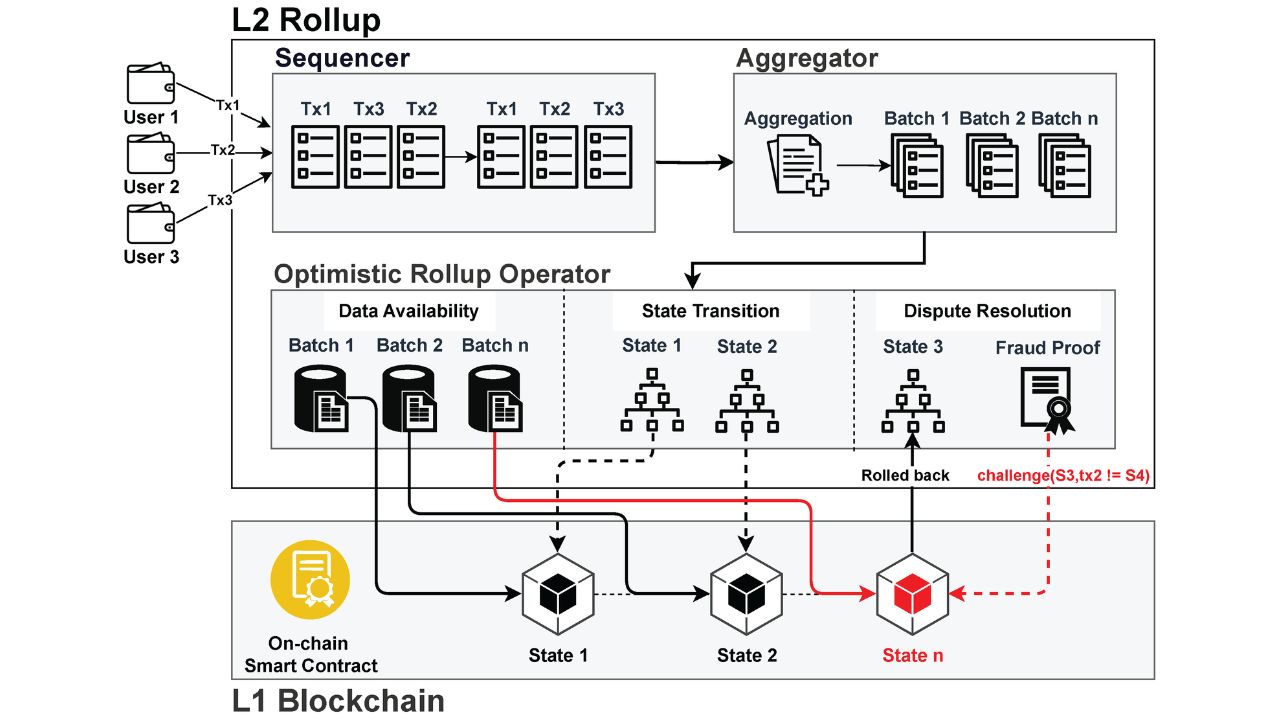
Skip the jargon for a second. A rollup processes thousands of transactions off Ethereum, then needs somewhere to publish the raw data so anyone can verify nothing was hidden or faked. That publishing job is data availability. Ethereum can do it through blobs, but it’s not cheap at scale. So specialized DA layers exist purely to store and prove that data is available, without running full smart contract execution themselves. Celestia and EigenDA are the two biggest names doing this job right now, and they’ve taken opposite routes to get there.
Quick points on why this layer matters at all:
- Rollups pay for DA on every batch they post, so it’s a direct cost line
- If data isn’t actually available, users can’t reconstruct their balances or challenge fraud
- Ethereum blobs work but get crowded and pricier as more rollups compete for block space
- A dedicated DA layer separates this job from execution, letting each side scale on its own
Celestia Explained: The Modular DA Pioneer
Celestia was the first chain built purely around this idea. It runs its own proof of stake consensus and lets light nodes verify data availability through sampling instead of downloading entire blocks. That sampling trick, called DAS, means even a phone can help secure the network without trusting anyone. Celestia now processes over 160 gigabytes of rollup data and commands roughly half the entire DA market by usage. More than 56 rollups use it today, split between mainnet and testnet deployments, spanning frameworks like Arbitrum Orbit, OP Stack and Polygon CDK.
Key Celestia facts worth knowing:
- Native token TIA, fully unlocked supply, priced around $0.40 as of September 2026
- Matcha upgrade doubled block size from 2MB to 8MB, with a 128MB roadmap already tested
- CIP-34 cut the data pruning window from 30 days to just over 7 days, easing node storage costs
- Fibre Blockspace is an experimental roadmap item targeting 1 terabit per second throughput eventually
EigenDA Explained: Restaking As A Security Model
EigenDA takes a completely different path. Instead of building a new validator set from zero, it plugs into EigenLayer’s restaking mechanism. ETH that’s already staked on Ethereum gets delegated a second time to secure EigenDA and other services, called Actively Validated Services or AVSs. The pitch is elegant. You don’t need to bootstrap fresh trust, you borrow Ethereum’s existing economic security and extend it. EigenDA currently sustains around 15 MB/s of throughput, with production tests touching 1 GB/s in bursts, and it powers rollups including Celo, Mantle, Fluent and LayerN.
Key EigenDA facts worth knowing:
- Backed by EigenLayer, which peaked near $19 to 20 billion TVL in 2024 before retracing sharply
- DefiLlama data through 2026 shows the restaking category, EigenCloud included, sitting closer to $6 to 10 billion
- Fee model supports payment in ETH, EIGEN or a rollup’s own native token
- EIGEN token holders may eventually capture a cut of AVS fees through a proposed buyback mechanism
Celestia vs EigenDA: Head To Head
| Factor | Celestia | EigenDA |
|---|---|---|
| Security source | Own native validator set, PoS | Restaked ETH via EigenLayer AVS |
| Verification method | Data availability sampling, light clients | Operator quorum attestations |
| Current throughput | About 1.33 MB/s live, 128MB blocks tested | About 15 MB/s sustained, 1 GB/s peak tested |
| Market share | Roughly 50% of DA usage | Growing, smaller live rollup count |
| Native token | TIA | EIGEN |
| Fee currency | TIA, gas priced per blob | ETH, EIGEN or rollup native token |
| Rollups live | 56 plus, Eclipse, Dymension, others | Celo, Mantle, Fluent, LayerN |
| Trust assumption | New chain, new validator economics | Inherits Ethereum’s economic security |
Security Model Deep Dive: Native Validators vs Borrowed Trust
Here’s the part that actually matters for anyone choosing between the two. Celestia’s security is entirely self contained. Its own token holders stake TIA, run consensus and get slashed for misbehavior. That’s clean, but it also means Celestia is a brand new trust network still proving itself under real economic stress. EigenDA flips that logic. It doesn’t ask you to trust a new token or new validator set at all. It asks you to trust operators who already have ETH at stake through Ethereum itself, layered with an extra slashing condition specific to EigenDA duties.
The catch with EigenDA’s approach is subtler. Restaked security is shared across many AVSs at once, so a validator’s stake technically backs several services simultaneously. Critics call this over extension risk, where a big enough slashing event across multiple AVSs could stress operators beyond what any single service assumed. Celestia doesn’t have that problem because its validators only ever secure Celestia. Neither model is objectively safer. They’re just different bets, one on a fresh dedicated chain, one on Ethereum’s existing gravity.
Cost And Throughput Compared
Cost is usually the deciding factor for smaller teams, and here the gap is real but shrinking. Celestia’s PayForBlob pricing is straightforward, you pay per byte based on live gas prices, and it’s historically been the cheapest option on the market by a wide margin. EigenDA’s fixed pricing and bandwidth reservation model appeals to teams who want predictable monthly costs rather than fluctuating gas driven fees. Neither wins outright. It depends on whether your rollup has spiky, unpredictable traffic or a steady, forecastable load.
Throughput tells a different story right now. EigenDA’s 15 MB/s sustained rate currently beats Celestia’s live 1.33 MB/s, though Celestia’s roadmap targets are far more aggressive on paper. Whether Celestia actually hits terabit speeds in production is still unproven. For a rollup shipping today, EigenDA’s current numbers look stronger on raw bandwidth, while Celestia leans on its track record and its much larger existing rollup ecosystem.
Who Is Actually Using Each One
Adoption tells you more than any spec sheet. Here’s a rough breakdown of where the two networks stand:
- Celestia powers Eclipse, several OP Stack based chains, and Orbit chains through Arbitrum’s native DA support
- Celestia has become close to a default option for gaming rollups chasing the lowest possible per transaction cost
- EigenDA secures Celo’s migration to an L2, plus Mantle, Fluent and LayerN
- EigenDA tends to attract teams already deep inside the Ethereum restaking ecosystem, who want DA and shared security handled together
- Rollup frameworks like OP Stack and Polygon CDK now support both as pluggable DA options, so the choice often comes down to the team’s philosophy, not technical lock in
Tokenomics: TIA vs EIGEN
TIA is fully unlocked as of 2026, which removes overhang risk but also means no future scarcity story from vesting cliffs. Its value is tied almost entirely to blob fee demand and DA market share. EIGEN’s story is messier. Its tokenomics upgrade, meant to route a slice of AVS fees back to holders through buybacks, still hasn’t fully activated. One widely shared 2026 analysis flagged EigenDA’s own monthly revenue as too small to meaningfully fund those buybacks yet. That’s a real gap between the pitch and the current numbers, and it’s worth watching before assuming EIGEN captures value the way its roadmap promises.
Which One Should Rollup Builders Actually Choose
There’s no universal right answer here, only a fit question. Ask yourself these things before picking:
- Do you want the cheapest possible per blob cost, or predictable fixed bandwidth pricing
- Are you comfortable trusting a newer, standalone validator network, or would you rather lean on Ethereum’s existing security
- Does your rollup already sit inside the restaking ecosystem, making EigenDA a natural extension
- Is raw current throughput more important than long term roadmap ambition
- Do you need a DA layer with the largest existing rollup network effect around it
Most teams building today lean toward Celestia for cost sensitive, high volume applications like gaming and social, and lean toward EigenDA when they’re already restaking heavy or want tighter alignment with Ethereum’s validator set.
The Real Risk Nobody Talks About
Both networks are still young relative to Ethereum itself. Celestia has never been tested by a genuine adversarial attack at massive scale. EigenDA’s restaking model has never faced a large cross AVS slashing cascade in production. Anyone telling you either option is fully battle tested is selling something. The honest answer is that both are the best tools we have right now for solving a real bottleneck, and both carry risks that simply haven’t shown up yet because the stakes haven’t gotten big enough to expose them.
FAQ
What is the main difference between Celestia and EigenDA? Celestia runs its own independent blockchain and validator set built specifically for data availability. EigenDA borrows security from Ethereum’s existing staked ETH through the EigenLayer restaking mechanism instead of building new validators from scratch.
Which is cheaper, Celestia or EigenDA? Celestia has historically offered lower per byte costs through its PayForBlob model. EigenDA offers fixed pricing and reserved bandwidth, which can work out cheaper for teams with steady, predictable data volume rather than spiky usage.
Is EigenDA safer than Celestia because it uses Ethereum’s security? Not automatically. EigenDA inherits Ethereum’s economic security, but that same restaked capital also secures other AVSs at the same time, creating shared risk across services. Celestia’s validators only ever secure Celestia, which is a narrower but more isolated risk profile.
Can a rollup switch between Celestia and EigenDA later? Yes, in many cases. Frameworks like OP Stack and Polygon CDK are built to support multiple DA backends, so migrating is possible, though it usually requires real engineering work and isn’t something to plan around casually.
Which rollups currently use Celestia versus EigenDA? Celestia counts more than 56 live rollups including Eclipse and several Orbit and OP Stack chains. EigenDA secures Celo’s L2 migration along with Mantle, Fluent and LayerN.