
You have forgotten a password this week. Probably more than once. You have also handed your Aadhaar copy, your PAN card, your college marksheet, and your salary slip to at least five different apps this year alone, and you have no real idea where any of those copies ended up sitting on some server. That is the entire problem decentralized identity was built to fix. Not the passwords exactly, but the deeper issue underneath them: you do not actually own your own identity online. Someone else is holding it hostage in a database, and DID wants to hand it back to you.
What Is Decentralized Identity (DID) in Web3, Really
Decentralized identity, or DID, is a way to prove who you are online without a company or government sitting in the middle every single time. Instead of Google or Aadhaar vouching for you, a DID lives on a blockchain or a similar distributed ledger. You control the keys. You decide what gets shared and with whom. Nobody can quietly sell your data or lose it in a breach because there is no central pot of data to steal in the first place. That is the core promise of decentralized identity did web3 projects are racing to deliver right now.
Think about how identity works today. Every website makes you a new account. Every app duplicates your data somewhere new. Every breach exposes millions of copies of the same information because that information got copied a thousand times over. DID flips this completely. You hold one identifier, cryptographically yours, and you present proofs from it whenever needed. The W3C actually standardized this format back in 2022, and it is why nearly every serious Web3 identity project, from Polygon ID to Worldcoin, builds on the same underlying spec instead of reinventing it.
How DID Actually Works, Step by Step
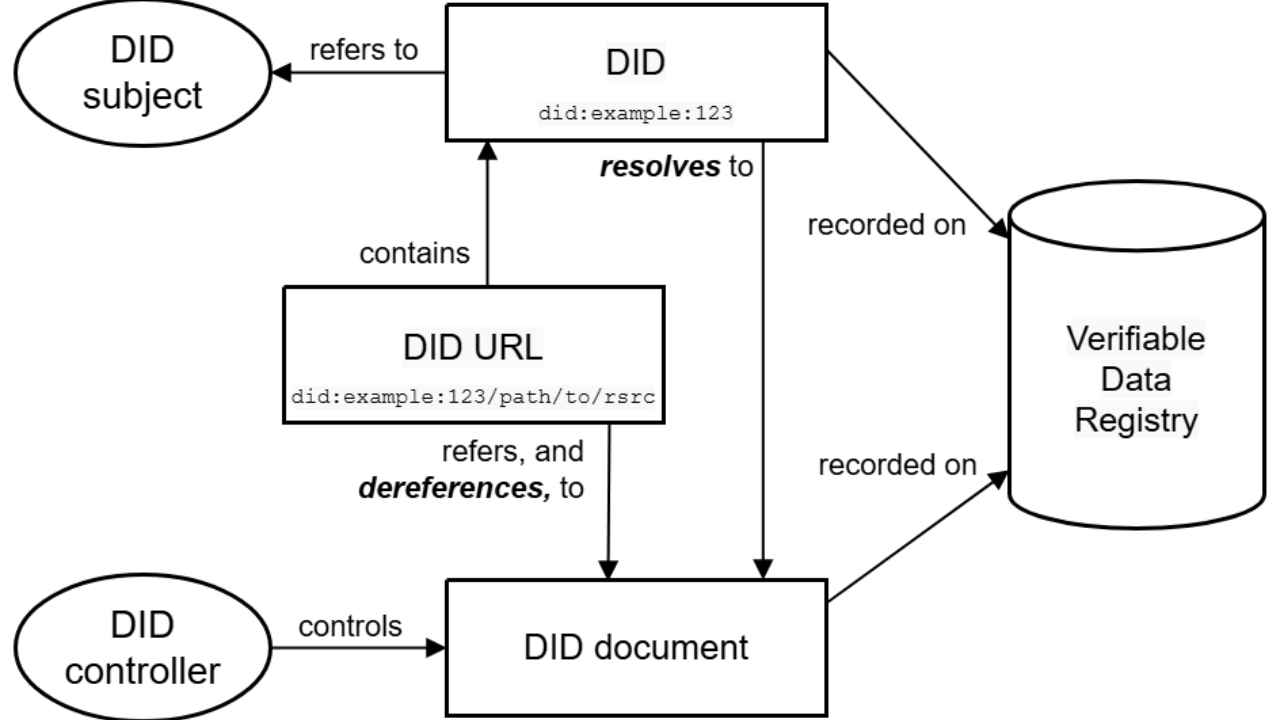
Here is the part most explainers skip. A DID is not just a fancy username. It is a full identifier that points to a document describing how to verify you, called a DID Document. That document lives on chain or on a decentralized storage layer, and it holds your public keys plus the methods others can use to check your credentials. When you prove something, say your age or your degree, you are not showing the document itself. You are proving a claim tied to it, using cryptography, without ever exposing the raw data behind it.
The mechanics break down into a few clean pieces:
- DID Identifier: A unique string, something like did:ethr:0x1234…, that points back to you and only you
- DID Document: The metadata file listing your public keys and verification methods
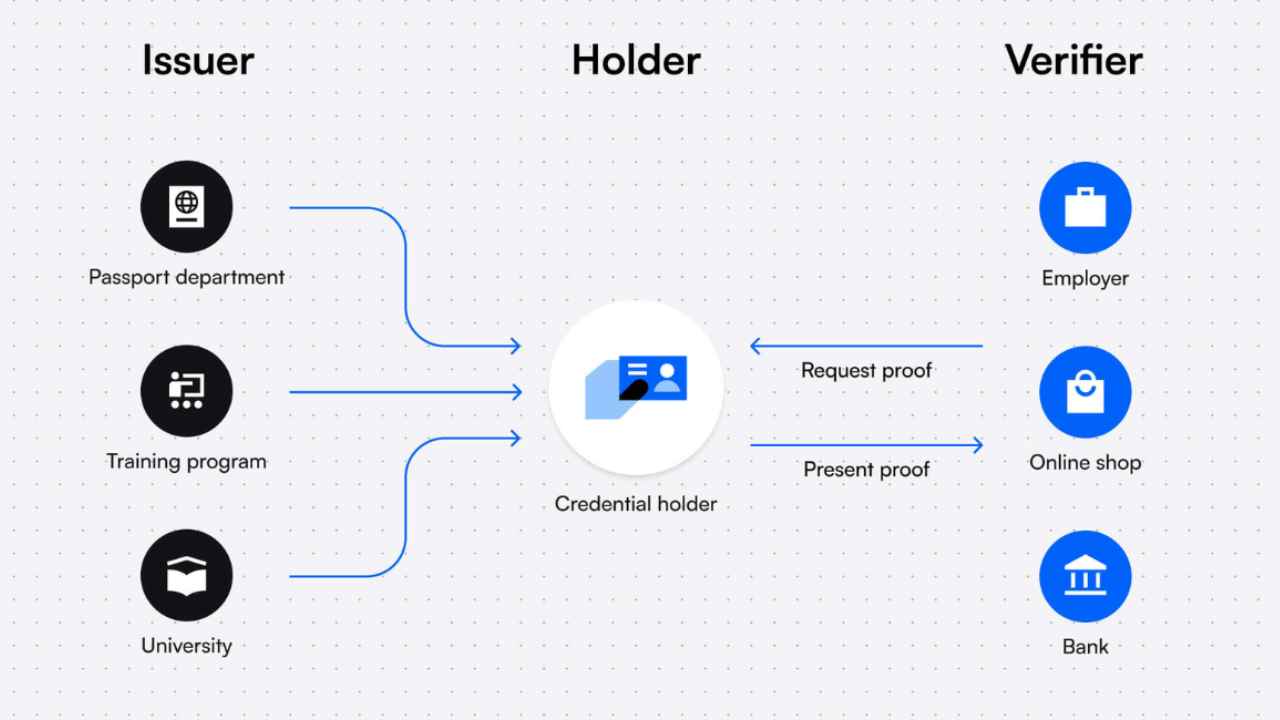
- Verifiable Credential: The actual claim, like a degree or a KYC pass, signed by whoever issued it
- Verifier: The app or service checking your credential without needing to contact the issuer directly
Nothing here requires trusting a single company to keep the lights on.
Soulbound Tokens Explained: The Identity Layer NFTs Never Managed to Be
Soulbound tokens, or SBTs, are the part of this story that actually made headlines. Vitalik Buterin and a couple of co authors floated the idea in a 2022 paper, and the concept stuck because it solved something NFTs never quite could. A regular NFT can be sold, flipped, and passed around. A soulbound token cannot. It is permanently locked to a single wallet, the way a university cannot un award your degree just because you sold it on OpenSea. That permanence is the entire point, and it is why the phrase soulbound tokens explained keeps trending every time a new identity project launches.
Picture your wallet as a digital version of you, not a digital version of your bank account. SBTs live there the way your work history lives on your LinkedIn, except nobody can fake them or buy a fresh set. A DAO could issue an SBT for meaningful contributions. A university could issue one for a completed course. A lending protocol could check your SBTs instead of asking for a credit score built by a company that has never met you. The token is not an asset to trade. It is proof, sitting quietly in your wallet, that something actually happened.
Soulbound Tokens vs Regular NFTs: What Actually Changes
People keep lumping SBTs in with NFTs because both sit in a wallet and both use similar token standards underneath. But the differences matter a lot once you look closely.
- Transferability: NFTs can be sold or gifted anytime. SBTs are locked to one wallet, permanently or until the issuer revokes them
- Purpose: NFTs usually represent ownership or art. SBTs represent reputation, credentials, or membership
- Value driver: NFT value comes from scarcity and demand. SBT value comes from trust and verification
- Market: NFTs trade on marketplaces with price charts. SBTs have no secondary market at all, by design
- Use case fit: NFTs work for collectibles and gaming items. SBTs work for diplomas, DAO reputation, and Sybil resistant airdrops
This distinction is exactly why Gitcoin Passport and Optimism’s RetroPGF lean on attestation frameworks instead of tradeable tokens for anything identity related.
Verifiable Credentials on Blockchain: The Trust Layer Behind Every Claim
A verifiable credential is basically a digital certificate that cannot be forged. Think of your driving license, but instead of trusting a plastic card with a hologram, you are trusting a cryptographic signature that any verifier can check instantly. The issuer signs it, you hold it in your wallet, and you present it selectively. A bar does not need your full date of birth. It just needs a yes or no on whether you are over 18, and a properly built verifiable credential can prove exactly that without leaking anything extra.
This is where verifiable credentials blockchain infrastructure earns its keep. The Ethereum Attestation Service, or EAS, is the biggest example right now, running live on Ethereum mainnet and several Layer 2s including Optimism and Arbitrum. Gitcoin Passport uses EAS to score wallets for Sybil resistance, pulling in stamps from Google, BrightID, and ENS ownership, then anchoring the resulting score on chain as an attestation. Optimism’s entire RetroPGF funding process runs on these attestations too. None of it needs a centralized database sitting behind the scenes.
Self Sovereign Identity: The Philosophy That Started All This
Self sovereign identity, often shortened to SSI, is the idea that sits underneath every DID and SBT project you will come across. It says you, and only you, should control your identity data. Not a bank. Not a government portal that goes down for maintenance every other Sunday. Not a social media company monetizing your profile behind your back. You hold the keys, you decide what gets shared, and you can revoke access whenever you want.
Three principles tend to define genuine self sovereign identity systems:
- Control: You hold the private keys, not a custodian or a company
- Selective disclosure: You share only the specific attribute needed, nothing more
- Portability: Your identity moves with you across apps, chains, and borders without needing to be rebuilt each time
This is a real philosophical shift, not just a technical one. It treats identity as something you own outright, the same way you own a house, rather than something rented from whichever platform happens to be hosting you that year.
Who Is Actually Building This Right Now
This is not a theoretical corner of crypto anymore. A handful of projects have already pushed real numbers.
World, the identity network co founded by Sam Altman, had already verified more than 6.3 million people through its iris scanning Orb devices as of early 2026, and it rolled out a major World ID upgrade in April 2026 with new integrations across Tinder, Zoom, and Docusign for proof of human checks. Polygon ID lets developers build zero knowledge based verifiable credentials directly into apps. The EU’s own eIDAS 2.0 regulation requires every member state to offer a certified Digital Identity Wallet to citizens by late December 2026, with regulated sectors like banking and telecom required to accept it roughly a year after that. Governments, not just crypto startups, are now building on the same core ideas.
The Market Numbers Behind the Hype
Analysts do not always agree on the exact size of this space, and honestly, that disagreement itself tells you how early we still are. Grand View Research pegs the global decentralized identity market at roughly 6.8 billion dollars in 2026, growing to over 258 billion dollars by 2033 at a compound annual growth rate above 68 percent. Other estimates land lower or higher depending on how they define the category, but the direction every single report agrees on is the same. This is growing fast, and enterprises are not waiting around for a perfect standard before jumping in.
| Feature | NFTs | Soulbound Tokens | Verifiable Credentials |
|---|---|---|---|
| Transferable | Yes | No | No |
| Primary use | Collectibles, art, gaming | Reputation, membership, credentials | Certified claims (age, degree, KYC) |
| Lives on chain | Yes, always | Usually yes | Often off chain, anchored on chain |
| Has resale value | Yes | No | No |
| Revocable by issuer | Rarely | Sometimes | Yes, typically |
The Real Challenges Nobody Talks About Enough
None of this is close to solved yet, and pretending otherwise would be dishonest. A few problems keep showing up across every serious identity project.
- Sybil resistance is still imperfect: Even biometric systems like World ID face criticism over privacy tradeoffs and regulatory pushback, with Spain and Portugal both restricting Orb operations at different points
- Revocation is messy: If an issuer needs to cancel a credential, there is no universally agreed process for doing that cleanly across chains
- Interoperability gaps remain: A DID built for Ethereum does not always play nicely with a DID built for Polygon or Solana without extra bridging work
- Adoption friction is real: Most people still do not want to manage a seed phrase just to prove their age at a website
- Regulatory uncertainty persists: GDPR and similar privacy laws were not written with soulbound tokens in mind, and courts are still catching up
Where This Is Actually Headed
Here is my honest take. DID and SBTs will not replace your passport next year, and anyone promising that is overselling it. But the quiet infrastructure work happening right now, EAS attestations, Gitcoin Passport scores, EU wallets rolling out by the end of 2026, is building toward something bigger than crypto natives usually admit. Identity is one of the few genuinely broken things the internet never properly fixed. Web3 did not invent the idea of owning your identity. It just finally built the cryptographic tools sturdy enough to make it real, and 2026 looks like the year that infrastructure stopped being theoretical.
Frequently Asked Questions
What is the difference between DID and a soulbound token? A DID is your core identifier, the anchor point for your identity. A soulbound token is one specific credential attached to that identity, like a badge proving you completed something, and it cannot be sold or transferred.
Are soulbound tokens the same as NFTs? No. They use similar technical standards but soulbound tokens are permanently non transferable and represent reputation or credentials rather than tradeable ownership.
Is self sovereign identity legal in India? There is no dedicated Indian law for self sovereign identity yet, though Aadhaar linked digital identity frameworks and India’s push toward account aggregator style consent architecture are moving in a similar direction.
Can verifiable credentials be faked? Not easily. They rely on cryptographic signatures from the issuer, so forging one without the issuer’s private key is effectively impossible with current technology.
Do I need crypto knowledge to use a DID wallet? Not really anymore. Newer wallets, including World App and several EU pilot wallets, hide most of the cryptographic complexity behind a normal looking app interface.




